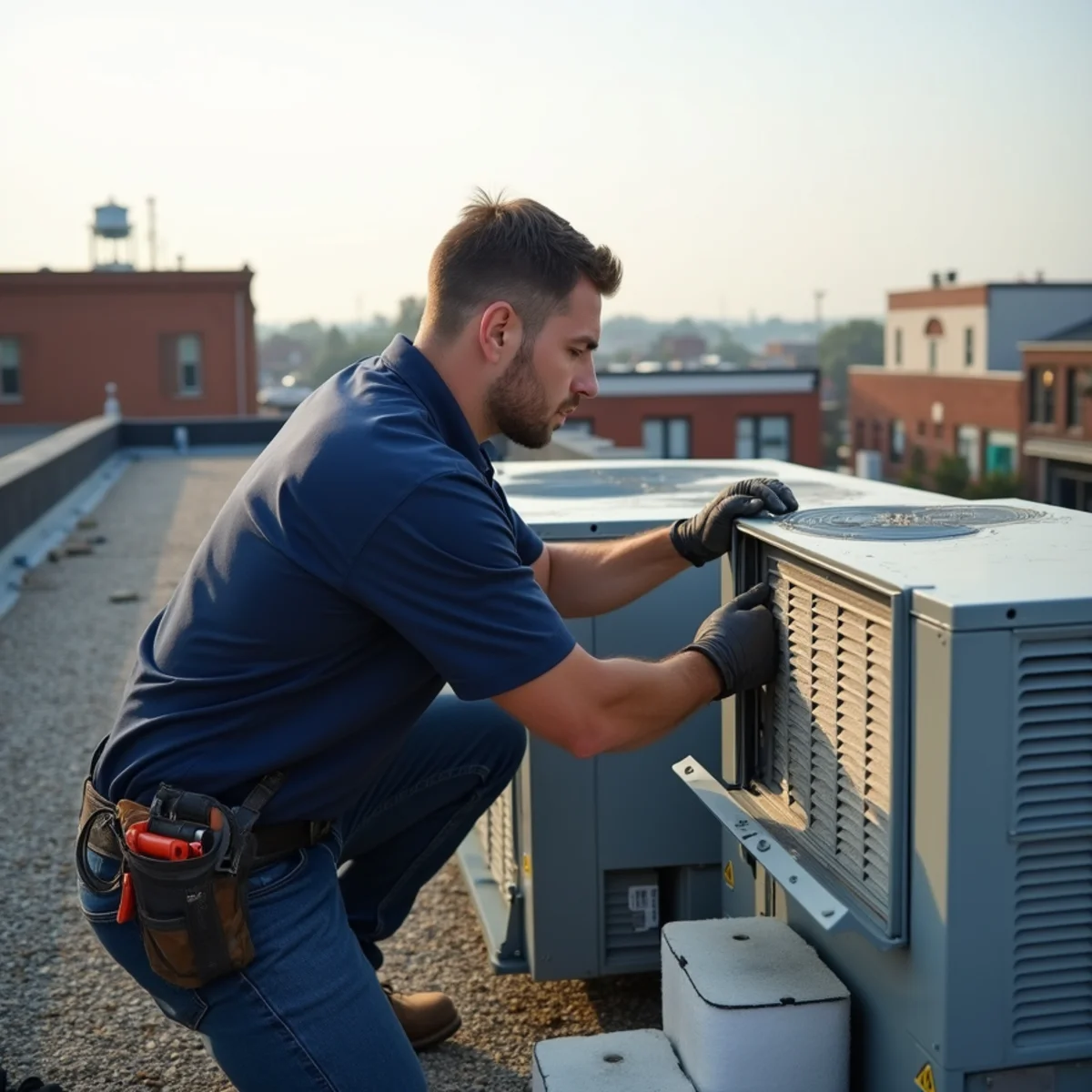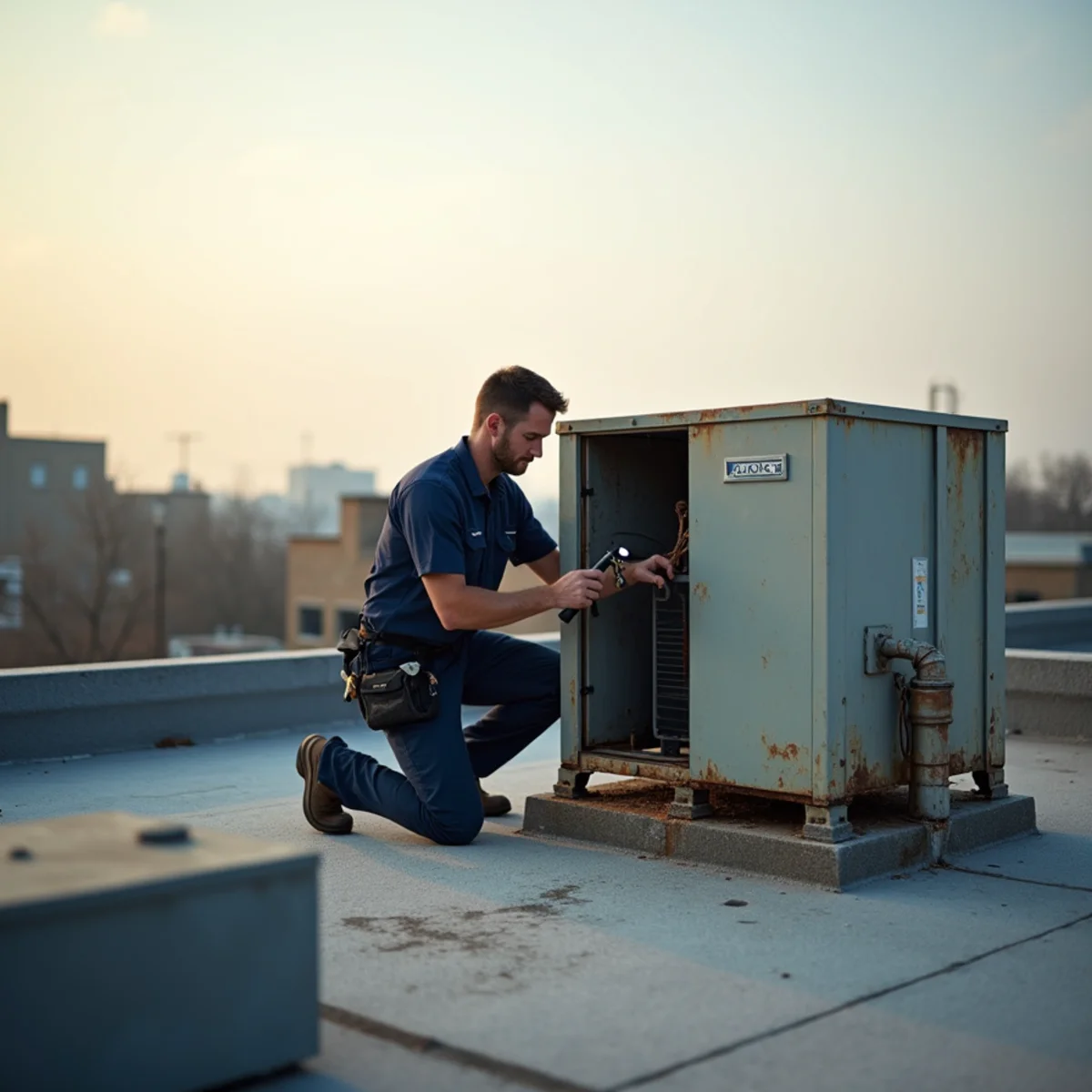
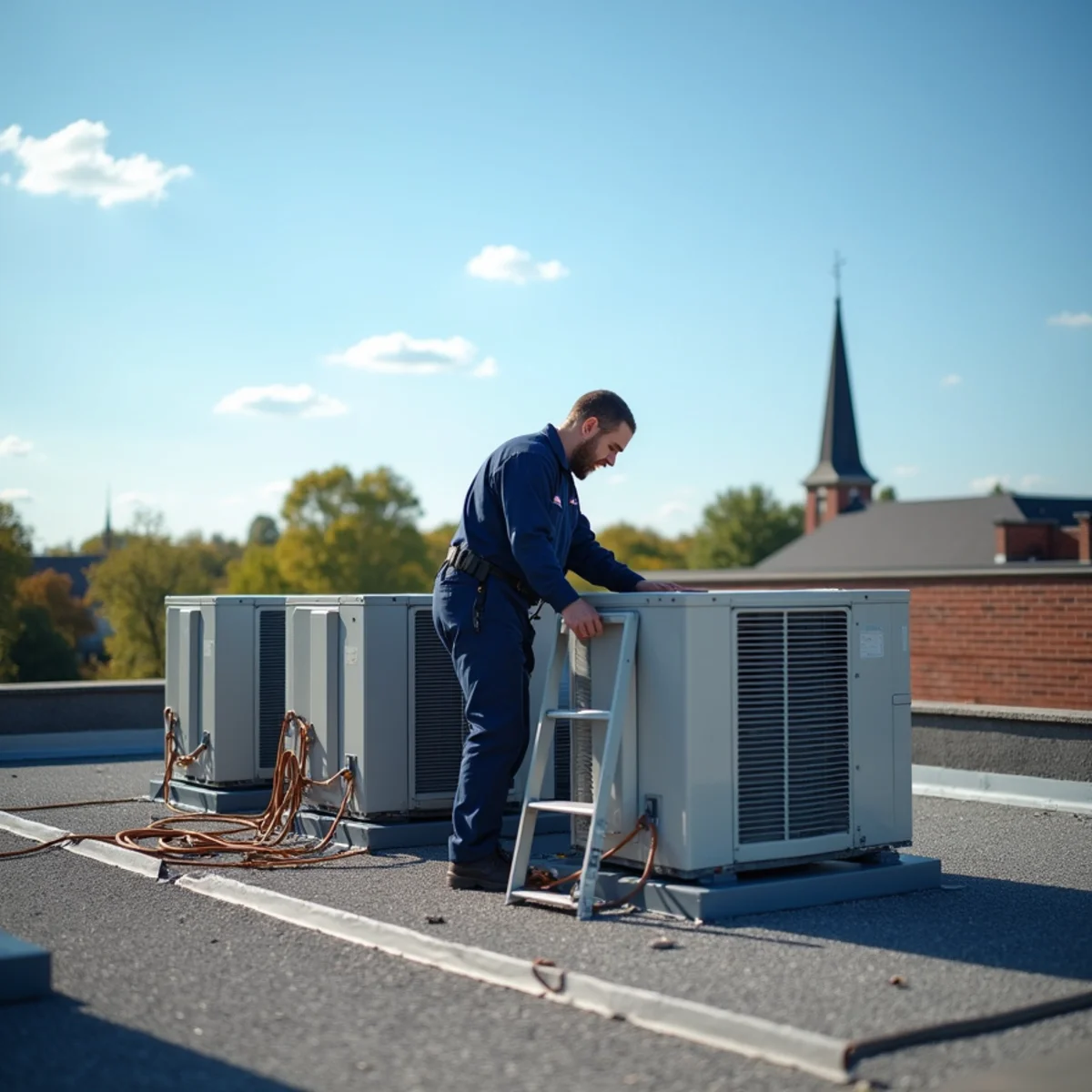
As a commercial HVAC contractor in Burlington, NC, Littlejohn HVAC Solutions services, repairs and replaces the rooftop units and split systems that run small offices, shops, churches and restaurants. You deal directly with the owner, get free written estimates, and can reach us 24/7 when a unit fails during business hours.
Signs Your Building's HVAC Needs Attention
Commercial systems usually complain quietly before they fail loudly. Watch for these.
Staff fighting over the thermostat
When one side of the office is cold and the other is hot, the cause is usually airflow balance or a single zone serving rooms with very different heat loads, not the people.
Water stains on ceiling tiles
A stain under a rooftop unit often traces to a clogged condensate trap, a failed curb gasket, or a cracked drain pan. It spreads with every rain and every humid afternoon.
Squealing at startup
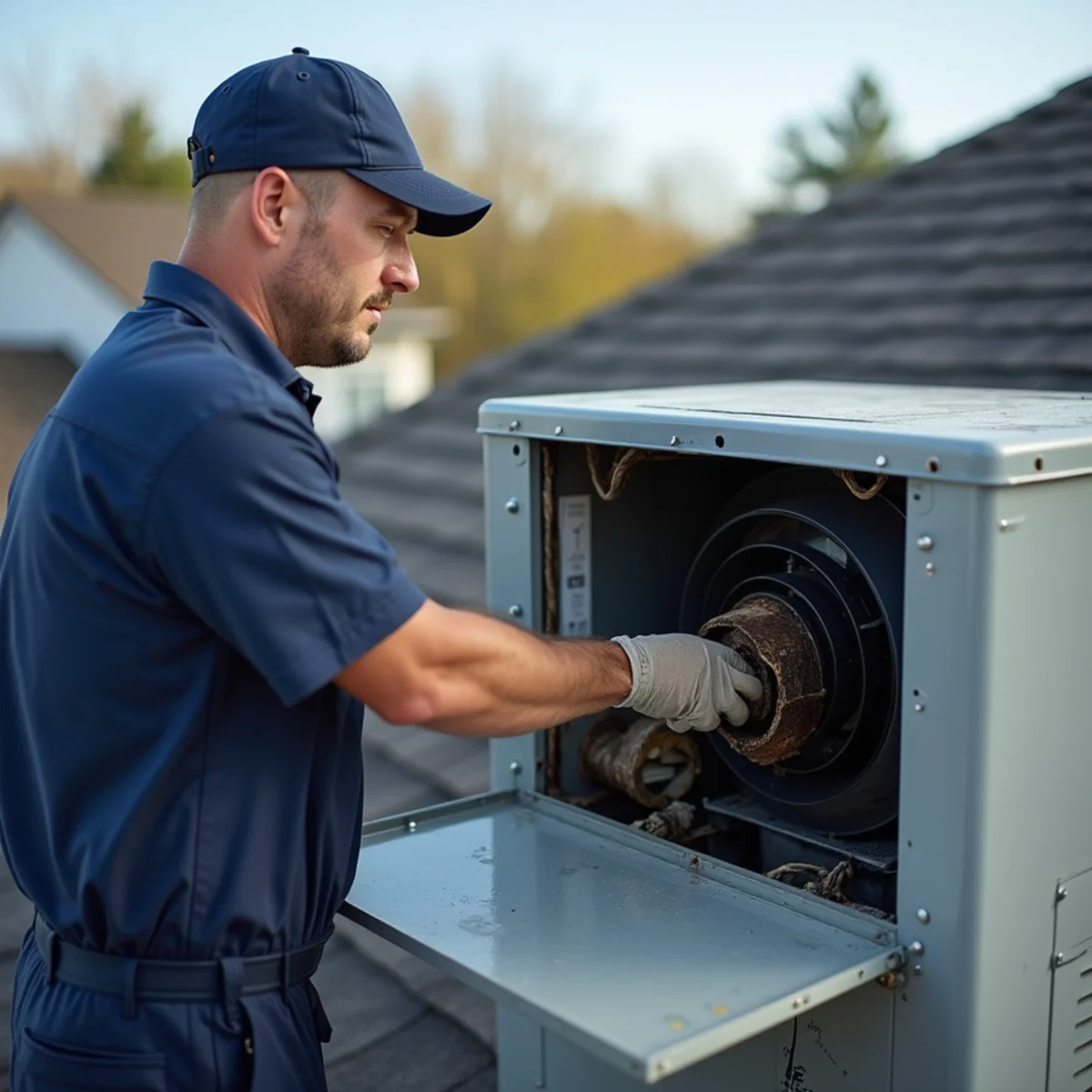
Belt-drive blowers on older rooftop units squeal when belts glaze or pulleys wear. A snapped belt means no airflow at all, and the unit may keep running with nothing moving.
Utility bills rising without a reason
A stuck-open economizer damper can pull hot, humid outdoor air all afternoon. Dirty condenser coils force compressors to work harder too.
Doors that whistle or slam
Strong pressure differences, common in restaurants with kitchen hoods, point to a make-up air problem that also pulls unconditioned air through every gap.
What Light Commercial Means Here
We focus on the buildings that big mechanical contractors tend to overlook: small offices, retail shops, churches, restaurants, salons, auto shops, and similar spaces. The equipment is usually packaged rooftop units, split systems, or a mix of both, and the owner is often the one calling about a problem, not a facilities manager.
We don't work on chillers, cooling towers, boiler plants, or large building automation systems. If your building needs that level of equipment, we'll tell you so and point you in the right direction rather than stretch beyond our scope.
Rooftop units
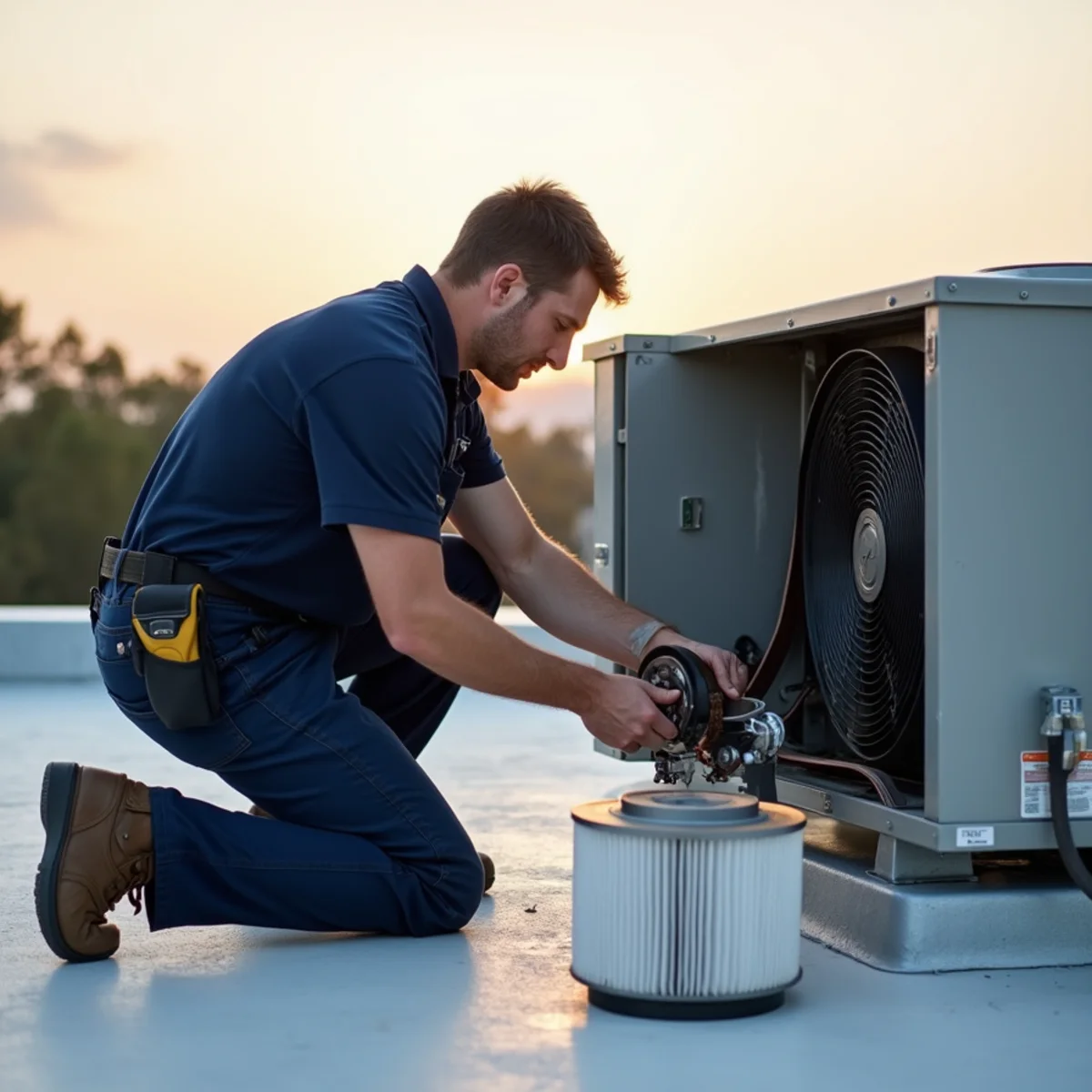
A packaged rooftop unit holds the compressor, coils, blower, and often a gas heat section in one cabinet sitting on a curb. Common failures include cracked condensate traps, economizer linkages that seize from rust, worn blower belts, burned contactors, and gas heat sections with dirty burners or failed ignition controls. Because these units sit exposed on a roof through summer storms and winter ice, curb seals and access panels deserve a look on every visit.
Split systems
Many small offices and storefronts run residential-style split systems: a condenser outside and an air handler or furnace in a closet, attic, or above the ceiling grid. Service is similar to a home system, but runtime is heavier and filters load up faster, especially in shops with foot traffic or sawdust.
Different Buildings, Different Problems
| Building type | Common issue | What we focus on |
|---|---|---|
| Churches | Large sanctuaries sit idle all week, then need full cooling for a Sunday service | Programmable schedules that pre-cool early, and equipment sized for crowd loads |
| Restaurants | Kitchen hoods exhaust huge volumes of air; grease coats condenser coils | Make-up air balance, frequent coil cleaning, and drain maintenance |
| Small offices | Server closets overheat; zones don't match the floor plan | Airflow balancing and dedicated cooling where equipment runs around the clock |
| Retail shops | Constant door openings and heavy lighting loads | Filter schedules and properly sized equipment |
| Auto and fabrication shops | Dust, fumes, and large overhead doors | Filtration, gas heater service, and coil protection |
Service Plans for Small Businesses
Rooftop equipment is out of sight, so it usually goes unmaintained until something breaks. A simple seasonal plan changes that. A typical plan includes filter changes on a set schedule, belt inspection and replacement, coil cleaning, condensate trap flushing, economizer checks, electrical tightening, and a heating safety check before the first cold snap.
We schedule visits around your hours. Restaurants usually want early mornings before prep starts, churches prefer weekdays, and offices often like late afternoons. The goal is that nobody notices we were there except for the service tag.
Serving Businesses Across the Triad's East Side
We work with business owners throughout Burlington, along the commercial corridors in Graham, in Mebane near the NC-119 corridor, and in older storefronts and shops in Greensboro. When a unit is past saving, we handle commercial HVAC replacement and installation, including new ductwork design and installation when a tenant build-out changes the floor plan. For planned upkeep, our preventive HVAC maintenance visits scale from a single split system to several rooftop units.
Inside a rooftop unit: what the meters tell us
A packaged rooftop unit is really three systems sharing one cabinet, and each has its own numbers worth writing down.
Three-phase power and phase balance
Most rooftop compressors run on three-phase power, which means three hot legs that should read nearly identical voltage. When one leg sags from a loose lug or a utility-side issue, the motor windings on that leg carry extra current and run hot. We measure leg-to-leg voltage and amps on each leg, then compare them. A spread of more than a few percent is a reason to chase a connection problem before it cooks a compressor.
Phase order matters too. A scroll compressor wired with two legs swapped will spin backward, sound loud and pump nothing. That usually shows up after utility work or a disconnect replacement, and a phase monitor on the unit can shut it down before damage is done.
Static pressure and belt-drive airflow
Rooftop blowers push air through filters, a coil, a heat exchanger and a duct system above the ceiling grid. We read total external static pressure in inches of water column with a manometer and check it against the fan table on the unit's data plate. High static usually points to loaded filters, a dirty evaporator coil, or ducts squeezed during a remodel. Low static with weak airflow often means a slipping belt or a pulley opened too far.
Gas heat: temperature rise and limit switches
Every gas heat section lists an allowable temperature rise on its rating plate. We measure supply air minus return air once burners stabilize. A rise above the listed range tells us airflow is too low, which trips the high limit and stresses the heat exchanger. A rise below it can mean underfiring or a gas pressure issue.
What's included in our light commercial HVAC service
A commercial visit should leave you with working equipment and a paper trail. Here's what each service call or seasonal visit covers.
Rooftop unit cabinet and curb inspection
We check curb gaskets, access panel screws, the service disconnect and the roof around the unit for ponding. Loose panels and failed gaskets are how rain ends up on ceiling tiles instead of on the roof.
Belt, pulley and bearing service
On belt-drive blowers we check tension and alignment, look for glazing or cracking, and listen for bearing noise. Replacing a belt on schedule costs a fraction of a lost afternoon of airflow.
Economizer operation test
We drive the outdoor-air damper through its full stroke, check the linkage and actuator, and verify the changeover setting. A damper stuck open on a muggy afternoon quietly drives up both humidity and the power bill.
Refrigerant circuit readings
Superheat, subcooling, compressor amps and condenser coil condition are recorded for each unit, so a slow leak or a failing compressor shows up as a trend on paper before it becomes a no-cooling call.
Gas heat section safety check
Before heating season we clean burners, test ignition and flame proving, inspect the heat exchanger where it's accessible, and confirm the flue and inducer are drafting correctly.
Condensate trap and pan service
Rooftop traps dry out, crack or clog with algae. We flush the trap and line, check the pan for rust-through, and confirm the drain discharges where it won't stain the roof or walls.
Written report and service tag
Every unit gets a dated tag and you get a written summary of readings, repairs made and items to budget for, which is useful for landlords, boards and insurance files.
How We Work With Commercial Clients
- 1
Walk the building
We look at every unit, check the roof curbs and drains, review thermostat locations, and ask where people complain most.
- 2
Document the equipment
You get a simple inventory of each unit: model, age, refrigerant type, filter size, and condition. That record makes future service faster.
- 3
Prioritize repairs
We separate what needs attention now from what can wait for a planned budget cycle, and put both in writing.
- 4
Work around your hours
Repairs and maintenance are scheduled to keep your doors open, with advance notice before any shutdown.
- 5
Follow up
After a repair or seasonal visit, we check that complaints have actually stopped, not just that the equipment runs.
What a business owner can check vs. what needs a pro
Checks from inside the building can speed up a diagnosis; anything on the roof or inside the cabinet belongs to a licensed tech.
Safe for you to check
- Confirm the thermostat is in the right mode, the schedule matches your current business hours, and a holiday or override setting hasn't been left on.
- Look for new ceiling-tile stains or drips below each unit after a rain and note which room, so we know which trap or curb to inspect first.
- Check that return grilles and supply diffusers aren't blocked by shelving, stacked inventory, signage or drop-ceiling tiles that were moved during cleaning.
- Keep a simple log of when complaints happen, such as mornings only or during lunch rush, since timing often points straight to the cause.
Leave to a licensed tech
- Anything done on the roofRoof access brings fall hazards, and walking a membrane roof wrong can crack it. Rooftop work also means live high-voltage wiring inside the cabinet.
- Three-phase electrical diagnosisMeasuring voltage imbalance and amp draw on energized three-phase circuits takes proper meters, protective gear and training. A mistake here can injure someone or destroy a compressor.
- Refrigerant charge and leak repairFederal EPA Section 608 rules require certification to handle refrigerant, and commercial circuits need superheat and subcooling readings taken at steady operating conditions.
- Gas heat section serviceBurner adjustment, gas pressure checks and heat exchanger inspection involve combustion safety. A cracked exchanger or poor draft can put carbon monoxide into occupied space.
- Belt, sheave and motor adjustmentsChanging pulley settings alters airflow and motor amps. Done without measuring static pressure, it can overload the blower motor or freeze the coil.
What Drives Light Commercial HVAC Costs
Commercial pricing depends heavily on the building. These are the factors we weigh in every quote.
- Number and type of units
- Several rooftop units take longer to service than one split system, and gas heat sections add safety checks.
- Roof access
- A fixed roof ladder or hatch is simple. Units that need a lift or crane for replacement add significant cost.
- Equipment age and refrigerant
- Older units on discontinued refrigerants are more expensive to repair and harder to source parts for.
- Scheduling requirements
- Work before opening hours or on weekends to avoid disrupting customers may carry a different rate.
- Permits and inspections
- Replacements usually require a mechanical permit and inspection, which we handle and include in the quote.
- Plan frequency
- Restaurants often need quarterly visits for coil and filter work, while a small office may only need spring and fall service.
Every commercial job starts with a written quote itemizing labor, parts, and permits. Financing options are available for replacement projects.
Red flags in commercial HVAC proposals and service visits
Small business owners often sign what's put in front of them because the building has to open tomorrow. These are the patterns worth questioning first.
Full replacement quoted without readings
If a proposal says a rooftop unit is shot but lists no amp draws, voltages, pressures or static readings, you have no way to judge it. Ask for the numbers that support the call, then compare repair and replacement side by side on paper.
Tonnage matched to the old unit only
Swapping a five-ton unit for another five-ton unit is common, but tenants change. A salon that became a restaurant or an office that added a server rack needs a fresh load look, or the new unit inherits the old comfort complaints.
Service plans with vague visit lists
A plan that just says quarterly maintenance can mean a filter swap and a glance. A useful agreement names the tasks, such as belt checks, coil cleaning, trap flushing, economizer tests and heat section safety checks, and gives you a written record after each visit.
No curb adapter or roof plan on replacements
New units rarely match the old curb exactly. A quote that skips the curb adapter, flashing and roof penetration details invites leaks later. Ask how the new cabinet will seal to the existing curb and who handles the roofing side.
Refrigerant added every season without a leak search
Topping off a unit each spring treats the symptom and bills you repeatedly. If a unit keeps coming up short, ask for a documented leak search and a repair option before paying for another recharge.
Why choose Littlejohn HVAC Solutions for commercial HVAC
One contact from first call to follow-up
Business owners don't get passed between a call center, a salesperson and a rotating tech. Jesse diagnoses the unit, writes the quote and does the work, so nothing gets lost between departments.
Answers when the building is open
We're open 24/7 for HVAC emergencies and offer same-day service on most calls, which matters when a dead rooftop unit means sending customers or staff home.
Installation and ductwork under one roof
We handle light commercial installation and complete duct installation, so a tenant build-out or a unit replacement doesn't need two contractors coordinating around your hours.
Budget-friendly paperwork
Free, no-obligation written estimates let you compare repair against replacement for each unit, and financing is available when replacement has to happen before the next budget cycle.
Commercial HVAC near you
Most of our commercial work sits within a short drive of Burlington, which keeps response times tight for small businesses. We service storefronts and offices in Elon near the university, shops and churches in Gibsonville, small businesses along the historic district in Hillsborough, downtown buildings in Reidsville, and light industrial and retail spaces in Asheboro. If your building is inside our roughly 50-mile radius, ask about seasonal service scheduled around your hours.
We provide light commercial HVAC throughout Burlington and Alamance County, including: