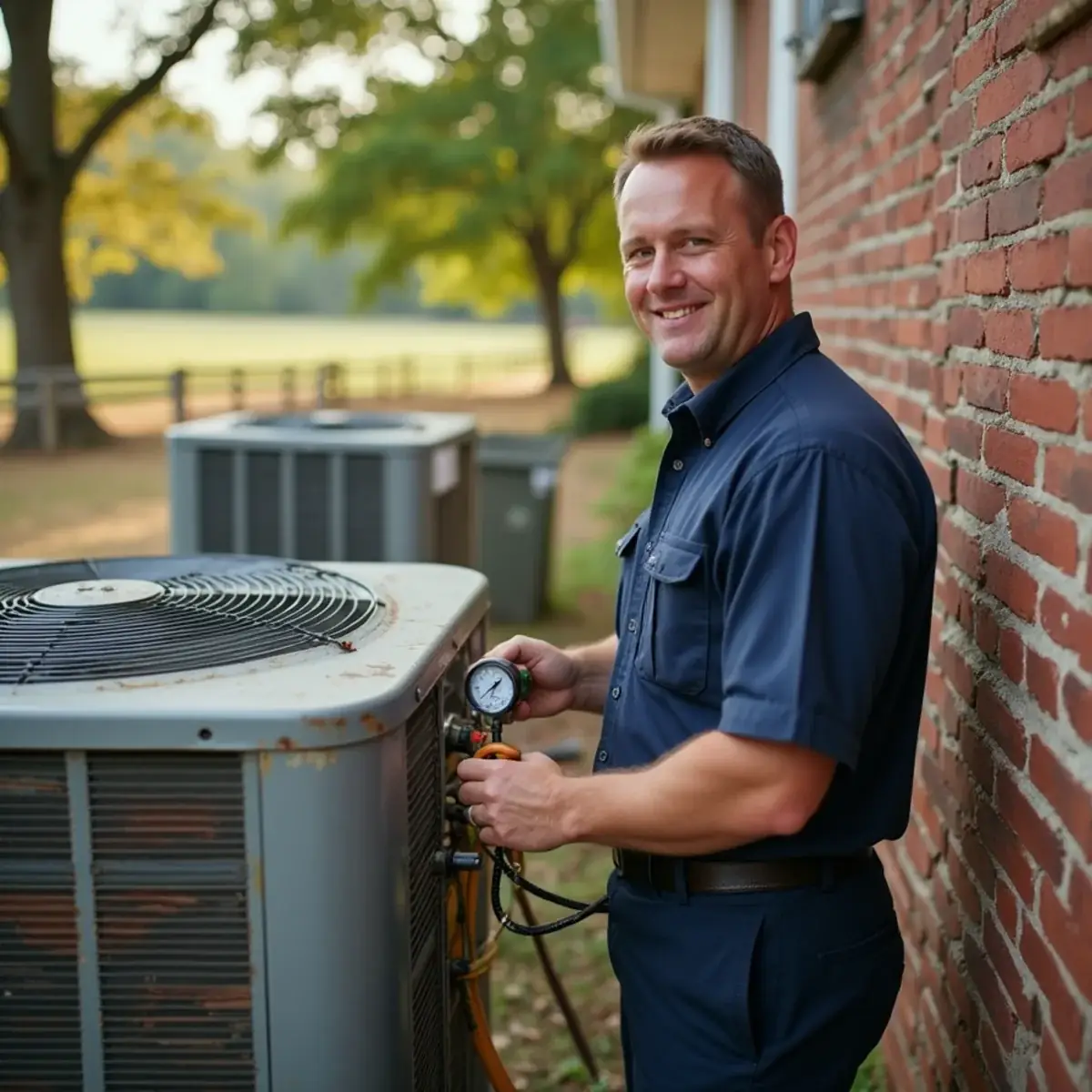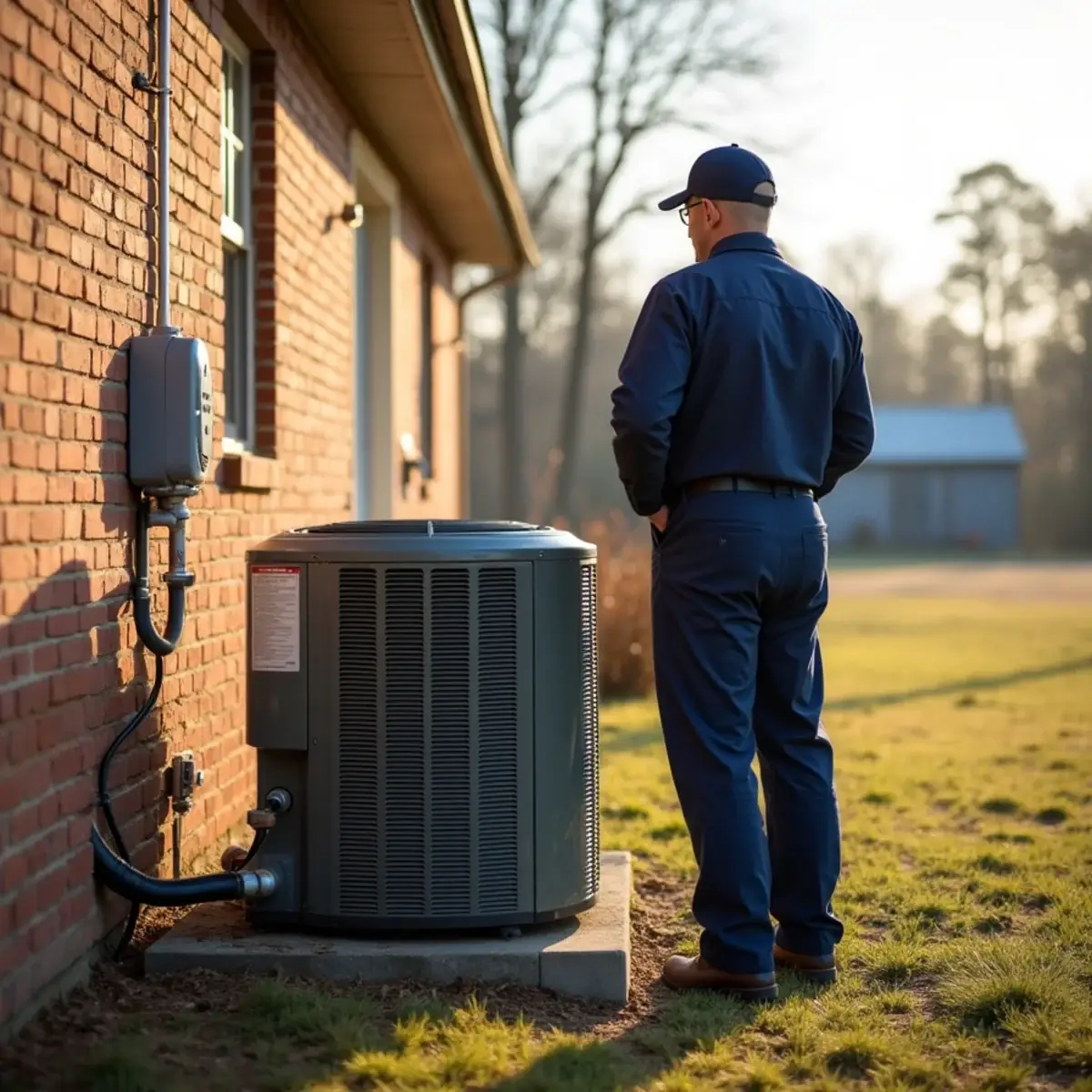
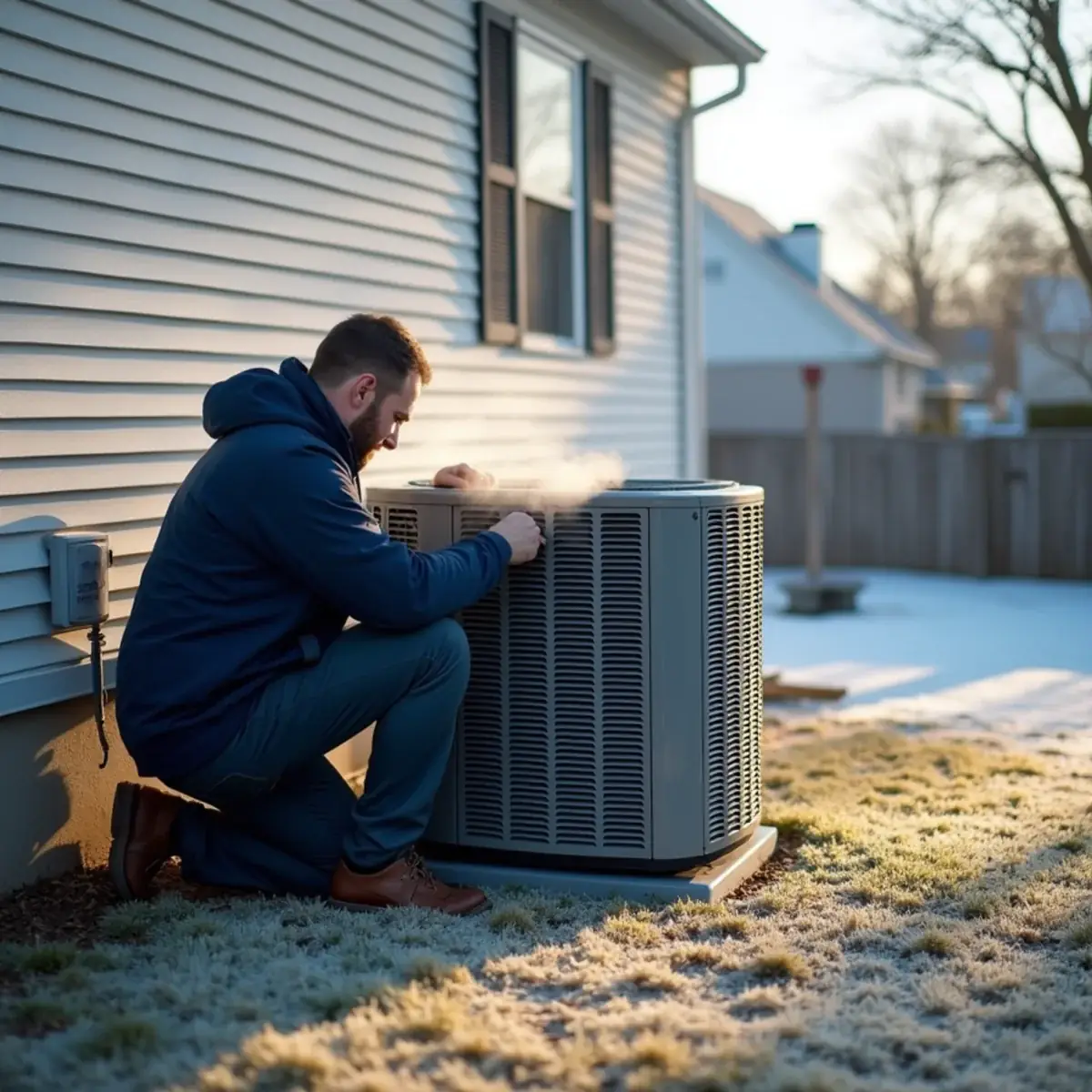
Heat pump repair in Burlington, NC is year-round work, because the same outdoor unit cools your house all summer and heats it all winter. Jesse diagnoses defrost, reversing valve, refrigerant and backup heat problems, tests the system in both modes where practical and gives you a written price before any repair. When replacement makes more sense, you get both numbers side by side.
Common Heat Pump Problems
Heat pumps have a few behaviors that look alarming but are normal, and a few that look minor but aren't. Here's how to tell the difference.
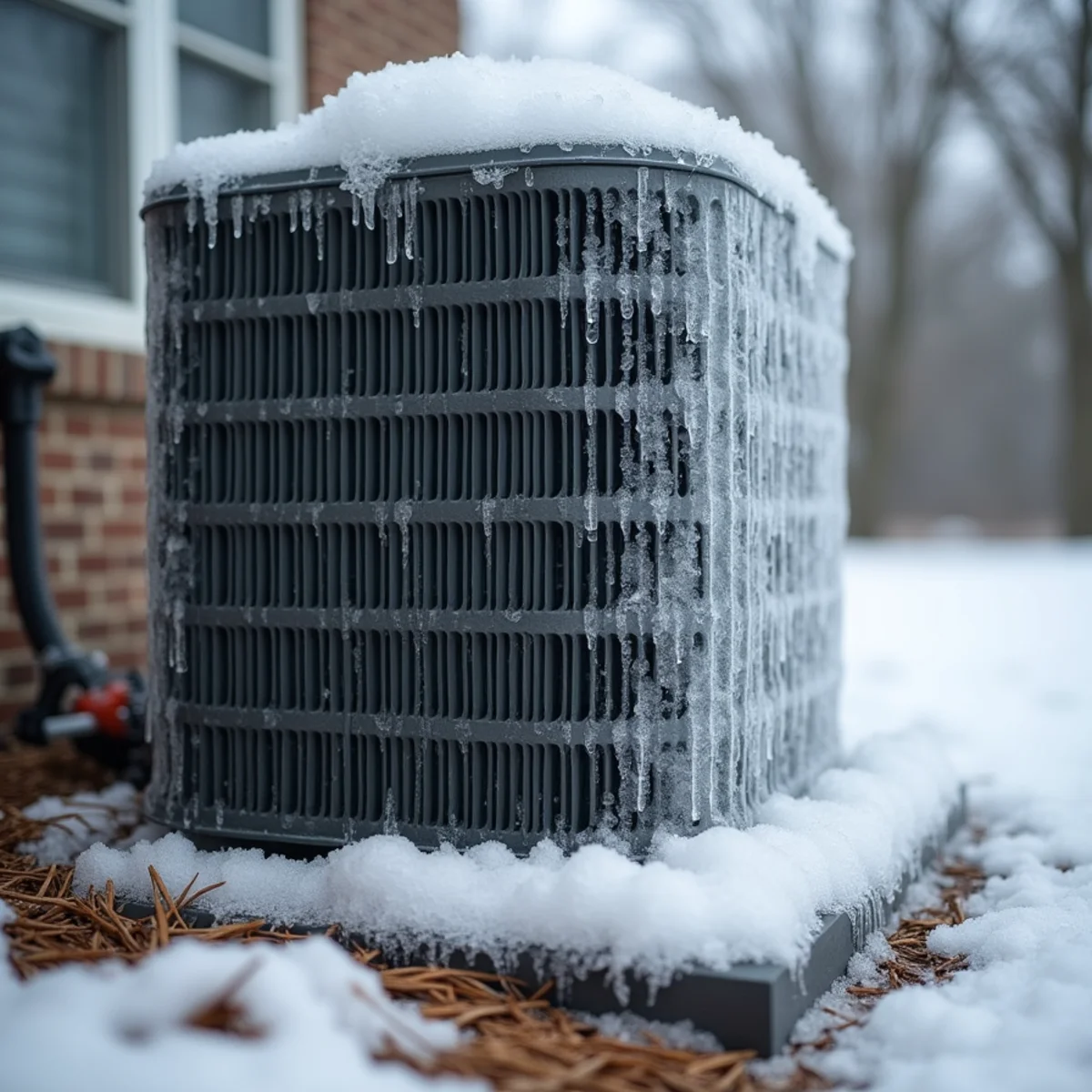
The outdoor unit is solid ice
Light frost that clears every 30 to 90 minutes is normal defrost. A thick block of ice that never melts points to a failed defrost board, sensor or low refrigerant.
Aux or emergency heat runs all the time
Electric strip heat is meant to help on the coldest days. If it's on constantly in 40-degree weather, the heat pump itself isn't pulling its weight and your power bill will show it.
Cool air in heat mode
A stuck reversing valve or a failed solenoid coil can leave the system cooling when you asked for heat.
Steam and a whooshing sound in winter
That's usually the defrost cycle working as designed. Noise that grinds or rattles, though, needs a look.
Runs constantly but can't keep up
Some long run time is normal on cold mornings. If the house never reaches the set point on a mild day, charge, airflow or the compressor may be the problem.
Outdoor fan stopped
A failed fan motor or capacitor stops heat transfer and can freeze the coil in winter or overheat the compressor in summer.
Heat Pump Repair in Burlington, NC
Heat pumps are the most common system we work on in and around Burlington, and for good reason. Our winters spend most of their time between the 30s and 50s, which is exactly where a heat pump is most efficient. But because the same equipment runs year-round, it racks up far more hours than an air conditioner and wears accordingly.
Defrost system failures
In winter the outdoor coil gets colder than the air, and moisture freezes on it. The defrost control briefly reverses the system to melt that ice. When a coil sensor, defrost board or reversing valve fails, the ice keeps building until airflow stops completely. We test the defrost board by forcing a cycle and checking sensor resistance at known temperatures.
Reversing valve and solenoid problems
The reversing valve is what lets a heat pump switch between heating and cooling. Often the valve itself is fine and only the electric solenoid coil has failed, which is a much smaller repair. When the valve body is stuck or leaking internally, replacement means recovering refrigerant and brazing, and that's when we talk about the age of the system.
Backup heat and thermostat setup
Plenty of high winter bills we see come from a thermostat that's set up wrong, not a broken heat pump. If the auxiliary heat is staged to come on too early, or the thermostat isn't configured for a heat pump at all, the strips run far more than they should. Correcting the settings and adding an outdoor temperature lockout can make a noticeable difference.
Repair or Replace an Older Heat Pump?
Because heat pumps run in both seasons, they tend to reach the end of their life sooner than a separate air conditioner and furnace. Here's the rough framework we use when walking homeowners through the decision:
| Situation | Usually repair | Usually replace |
|---|---|---|
| System age | Under about 10 years | Past 12 to 15 years |
| Failed part | Capacitor, contactor, fan motor, defrost board | Compressor or outdoor coil on an older unit |
| Refrigerant | R-410A with a repairable leak | R-22 with any significant leak |
| Comfort | House heats evenly when running | Constant strip heat use and hot or cold rooms |
When replacement makes sense, we size the new heat pump with a load calculation and look at whether a variable-speed inverter model fits your budget. Those units handle cold snaps much better than older single-stage designs. Our HVAC installation and replacement service covers that process in full, and for rooms or additions without ducts, a ductless mini-split heat pump is often the better tool.
Heat Pumps and Gas Backup
Some homes around Burlington pair a heat pump with a gas or propane furnace instead of electric strips. In these dual fuel setups, the heat pump handles most of the winter and the furnace takes over below a set outdoor temperature. We service both halves, and if the gas side is giving you trouble, our furnace repair service covers ignition and burner problems.
We service heat pumps throughout the growing subdivisions of Whitsett, the rural homes around the Village of Alamance, and the single-story and manufactured homes common in Green Level.
How a heat pump moves heat, and where the numbers slip
The balance point and why backup heat exists
A heat pump's heating capacity falls as the outdoor temperature drops, while your house loses heat faster. The temperature where those two lines cross is the balance point. Above it, the heat pump carries the house on its own. Below it, electric strips or a gas furnace make up the difference. For a well-matched single-stage system in a Piedmont home, the balance point commonly lands somewhere in the 30s. If yours seems to sit in the 40s, the heat pump may be undersized, low on charge or losing heat through leaky ducts.
Checking charge when it's cold outside
Summer charging charts don't apply in January. Heating-mode pressures swing with outdoor temperature and frost load, and many manufacturers want charge verified by weighing it in or by using a heating chart specific to that model. That's why we won't adjust a heat pump's charge from a single cold-morning pressure reading. When a winter leak is suspected, we confirm it with a leak search first and set the final charge by the manufacturer's method.
Parts only a heat pump has
- Check valves and bidirectional metering devices route refrigerant one way in cooling and another in heating. A stuck one gives you a system that works fine in summer but runs poorly all winter.
- The accumulator protects the compressor from liquid refrigerant during defrost. In our damp climate, its steel shell can rust through at the base where water sits.
- The crankcase heater keeps refrigerant from settling in the compressor oil on cold nights. When it fails, you may hear a harsh knock at startup.
- Demand defrost controls use coil and air sensors to start defrost only when frost is actually building. A drifting sensor makes the unit defrost too often or not nearly enough.
What's included in our heat pump service
A heat pump that works in one mode can still be failing in the other. Every service call from us includes these checks so the system is ready for whichever season comes next.
Backup heat strip and sequencer test
We measure amperage on each electric heat strip and confirm the sequencers stage them on and off correctly. A burned element or stuck sequencer shows up as high bills long before the house gets cold.
Thermostat configuration review
We confirm the thermostat is set up for a heat pump, the O/B reversing terminal matches the brand, and auxiliary heat is locked out above a sensible outdoor temperature so the strips don't run on mild days.
Outdoor coil cleaning and fin care
Pollen, leaves and grass clippings are rinsed from the outdoor coil, and bent fins are combed straight. A clean coil matters in both seasons, because that coil collects heat in winter and rejects it in summer.
Unit clearance and elevation
We check that the outdoor unit sits level, has at least a foot of clearance, and is raised on risers or a stand where melting ice and snow could otherwise refreeze around the base pan and coil.
Refrigerant charge in the current season
Heat pump charge is checked with the conditions of the day in mind, and any sign of a leak, such as oil staining at fittings or valves, is pointed out and photographed for you.
Changeover check between heating and cooling
We confirm the reversing valve shifts cleanly and the system builds proper pressures in each mode, so you are not surprised by a stuck valve the first warm day of spring.
How We Handle Heat Pump Service
- 1
Observe it running
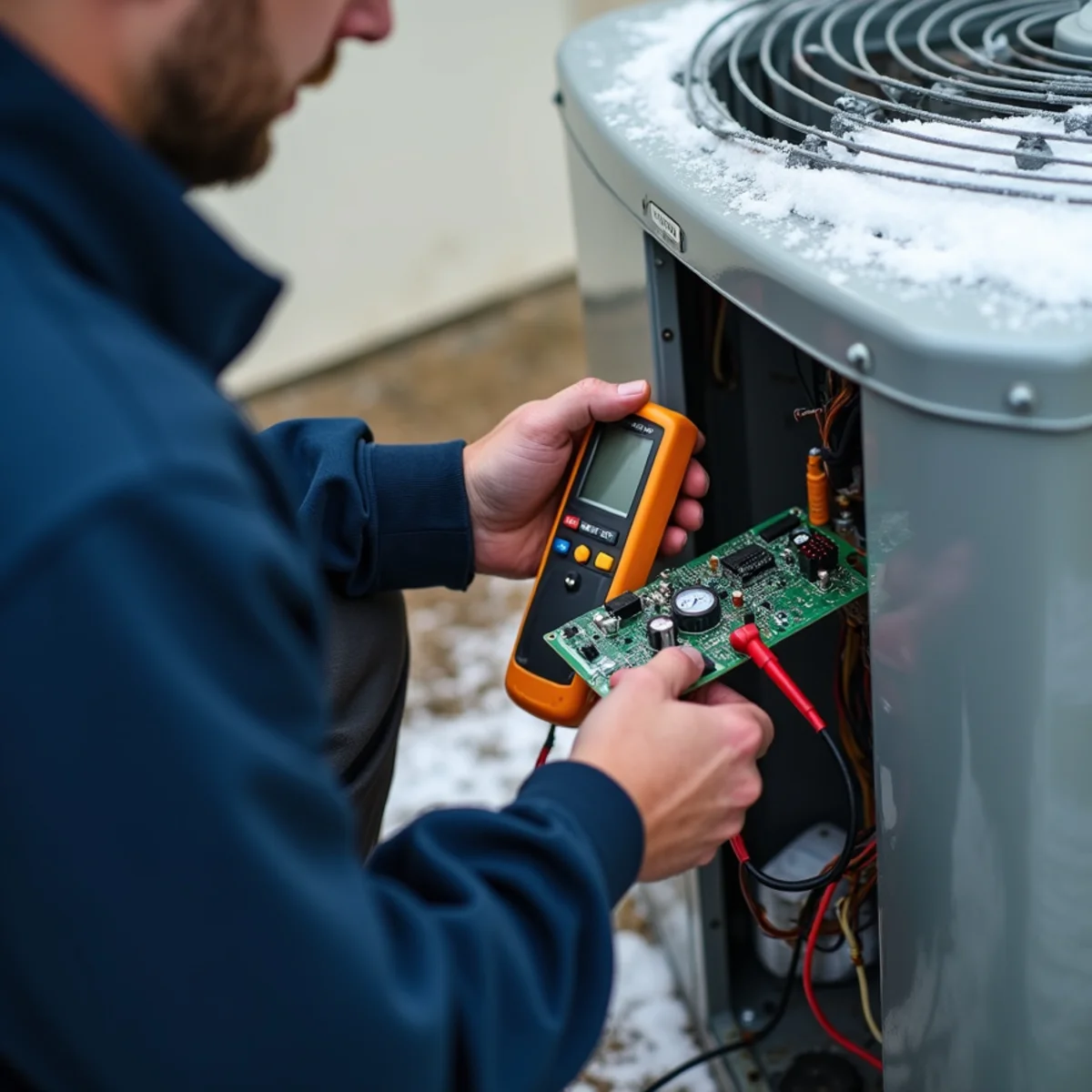
We watch the system in its current mode, check what the thermostat is calling for and note whether strip heat is engaged.
- 2
Measure performance
Refrigerant pressures, temperature split, amp draw and outdoor coil condition tell us whether the heat pump is actually moving heat.
- 3
Test controls
We check the defrost board, sensors, reversing valve solenoid and thermostat configuration, since many problems live there.
- 4
Explain and quote
You get a clear explanation and a written price, including a replacement comparison if the unit is older.
- 5
Repair and verify both modes
When practical, we run the system in heating and cooling to confirm it switches properly before we leave.
Heat pump checks for homeowners vs. jobs for a technician
Heat pumps have more moving parts than a straight air conditioner, but several useful checks take nothing more than your eyes and the thermostat.
Safe for you to check
- Watch one defrost cycle on a frosty morning. The outdoor fan should stop, you may see steam, and the coil should come back clear within several minutes.
- Note the outdoor temperature whenever the aux heat indicator comes on. If it lights up on mild afternoons, tell your technician so the lockout can be checked.
- Compare this winter's electric bill with the same month last year. A sharp jump during similar weather often means strip heat is running more than it should.
- On the first warm spring day, switch to cooling and confirm the supply air turns cool within a few minutes after the reversing valve shifts.
Leave to a licensed tech
- Testing defrost boards and sensorsForcing a defrost cycle and reading sensor resistance means working inside a live, high-voltage outdoor cabinet where the fan and compressor can start without warning.
- Replacing a reversing valveRefrigerant must be recovered under EPA Section 608 rules, and the valve has to be brazed in with its internal slide protected from heat or it will fail again.
- Servicing heat strips and sequencersElectric backup heat runs on 240 volts at high amperage. Loose lugs and failing sequencers are fire risks, and element testing requires power isolated at the breaker.
- Setting heating-mode refrigerant chargeWinter charging follows manufacturer charts or weight, and only certified technicians may handle refrigerant. Overcharging in heating mode can flood the compressor with liquid.
What Affects Heat Pump Service Cost
Heat pump repairs vary widely. These are the factors that drive the number.
- Electrical vs. sealed-system repair
- Capacitors, contactors and defrost boards are electrical repairs. Reversing valves, compressors and coils require refrigerant recovery and brazing.
- Refrigerant type
- Older R-22 heat pumps are expensive to recharge. Newer refrigerants cost less and are easier to source.
- Single-stage or inverter equipment
- Variable-speed inverter heat pumps use specialized boards and compressors that cost more to replace.
- Thermostat changes
- Sometimes the fix is a properly configured heat pump thermostat, which is far less costly than hardware.
- Replacement system size and efficiency
- If replacing, tonnage, SEER2 and HSPF2 ratings and whether ducts need work set the price.
Before any heat pump work, you get a written quote. If the system is older, we'll include what a replacement would cost so you can compare without pressure.
Red flags in heat pump repair and replacement quotes
Heat pump behavior is easy to misread in winter, which also makes it easy to oversell, so watch for these.
Compressor condemned during a defrost cycle
A heat pump in defrost blows cool air indoors, makes loud whooshing sounds and can look like it's failing. If someone diagnoses a bad compressor after a few minutes on a frosty morning, ask whether they waited for defrost to finish and measured the unit afterward.
New unit recommended for high winter bills
High bills often trace back to aux heat staged too early, a missing outdoor lockout or a stuck sequencer. Before replacing a working heat pump for efficiency reasons, ask whether the thermostat settings and strip heat amperage were checked. That fix costs a fraction of new equipment.
Replacement sized without cold-weather capacity
A new heat pump chosen only by its cooling tonnage can leave you leaning on strips every cold night. Ask for the model's published heating capacity at 17 degrees and how it compares with your home's heat loss at our winter design temperature.
Old indoor coil kept on a heat pump swap
Leaving an old indoor coil in place is riskier with a heat pump than with an air conditioner, because the coil's metering has to work in both directions. Ask whether the existing coil is rated for heat pump use with the new refrigerant before accepting an outdoor-only quote.
Why choose Littlejohn HVAC Solutions for heat pump service
Repair first when repair is right
Our reviews include a homeowner told by three techs she needed a new unit, until Jesse fixed the actual fault. With heat pumps, a solenoid coil or defrost sensor is often the real culprit.
Available through cold snaps
When a heat pump ices over during a hard freeze, waiting days is not an option. We are open 24/7 for heating and cooling emergencies and offer same-day service on most calls.
Free written estimates on replacements
If an older heat pump needs a compressor, you get a free, no-obligation written estimate for replacement alongside the repair price, so you are comparing real figures.
Financing when the answer is a new system
Financing options are available on qualifying heat pump replacements, so a failed compressor in January doesn't force a rushed decision. For repairs, we take cash, Venmo, Cash App and Zelle.
Heat Pumps near you
Heat pumps heat most homes in our service area, so these calls come from every direction. We work on systems in Gibsonville and McLeansville, where many subdivisions were built all-electric, and in Sedalia along the Guilford County line. Farther out, homes near Ossipee and Saxapahaw often sit in low spots where frost settles heavily on outdoor coils. Burlington itself remains the center of our route.
We provide heat pump services throughout Burlington and Alamance County, including: