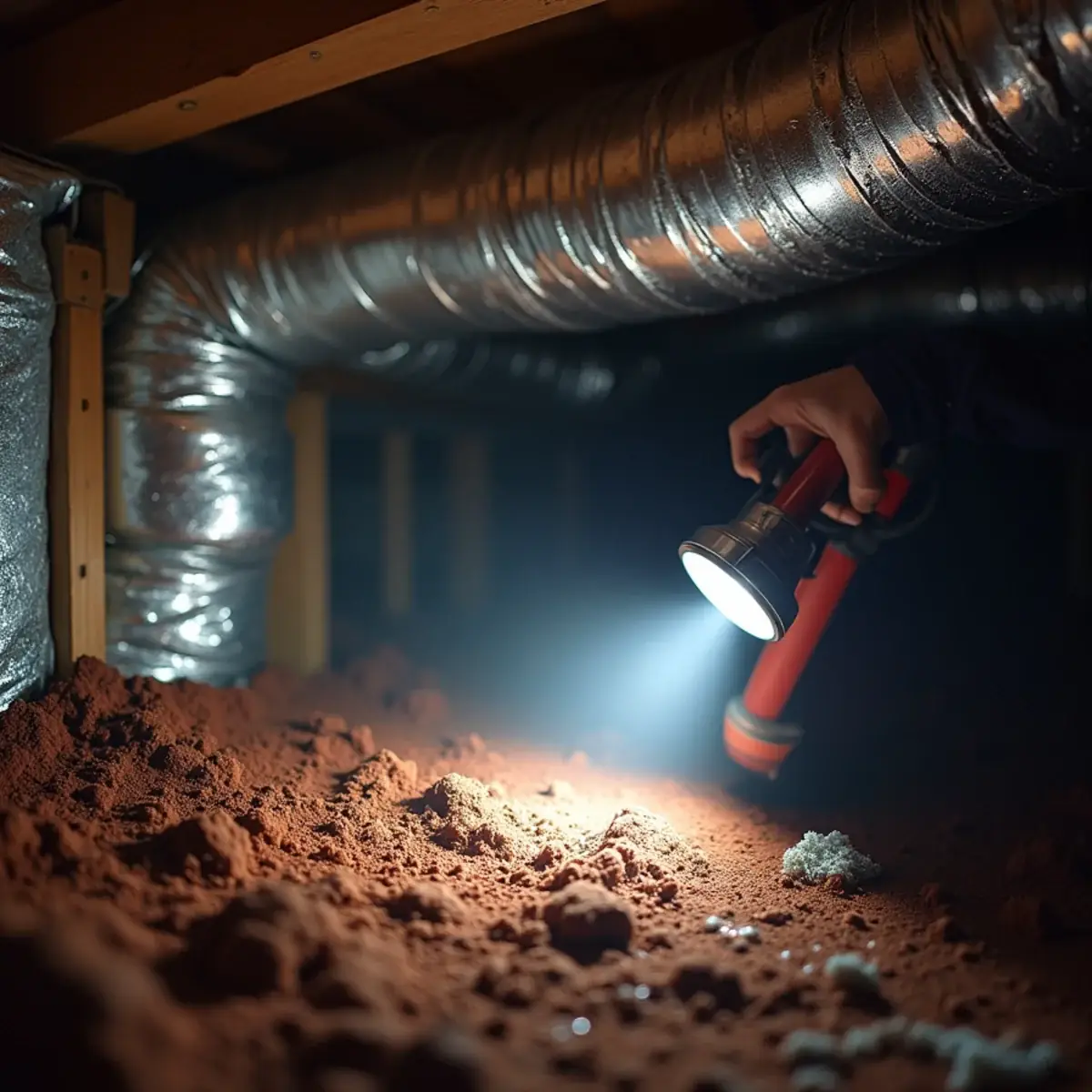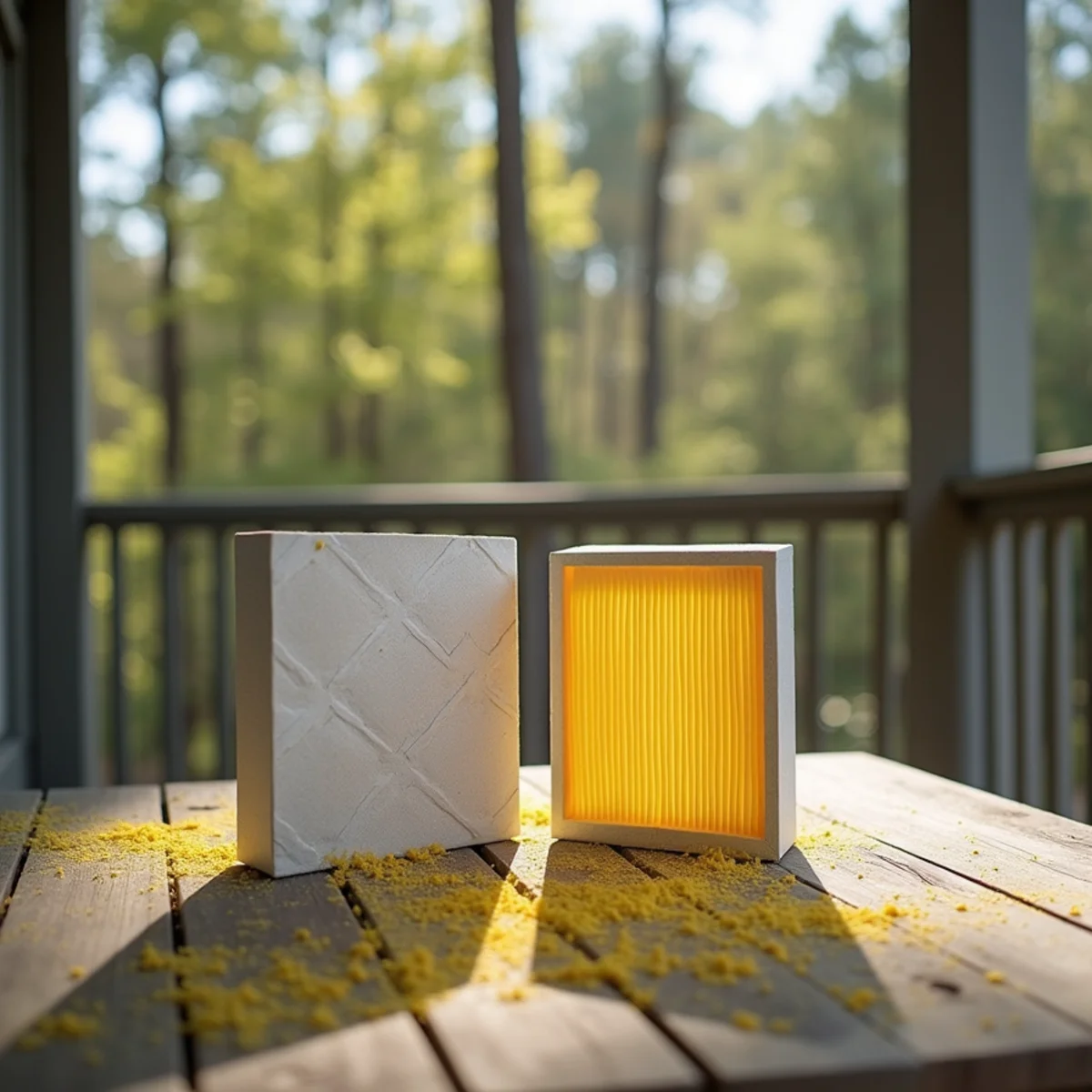

Indoor air quality service in Burlington, NC starts with moisture: we measure humidity, find leaky returns and damp crawlspaces, then fix the source with dehumidification, sealing and properly sized filtration. Because we handle both the HVAC system and crawlspace vapor barriers, the fix gets planned as one job instead of three separate sales pitches.
Signs of a Humidity or Air Quality Problem
Moisture and poor filtration show up in ways people often blame on something else.
Musty smell in the house
The odor usually rises from the crawlspace through floor gaps and leaky return ducts, especially in summer.
Clammy air even when it's cool
If the thermostat says 72 but the air feels sticky, indoor humidity is likely above 60 percent.
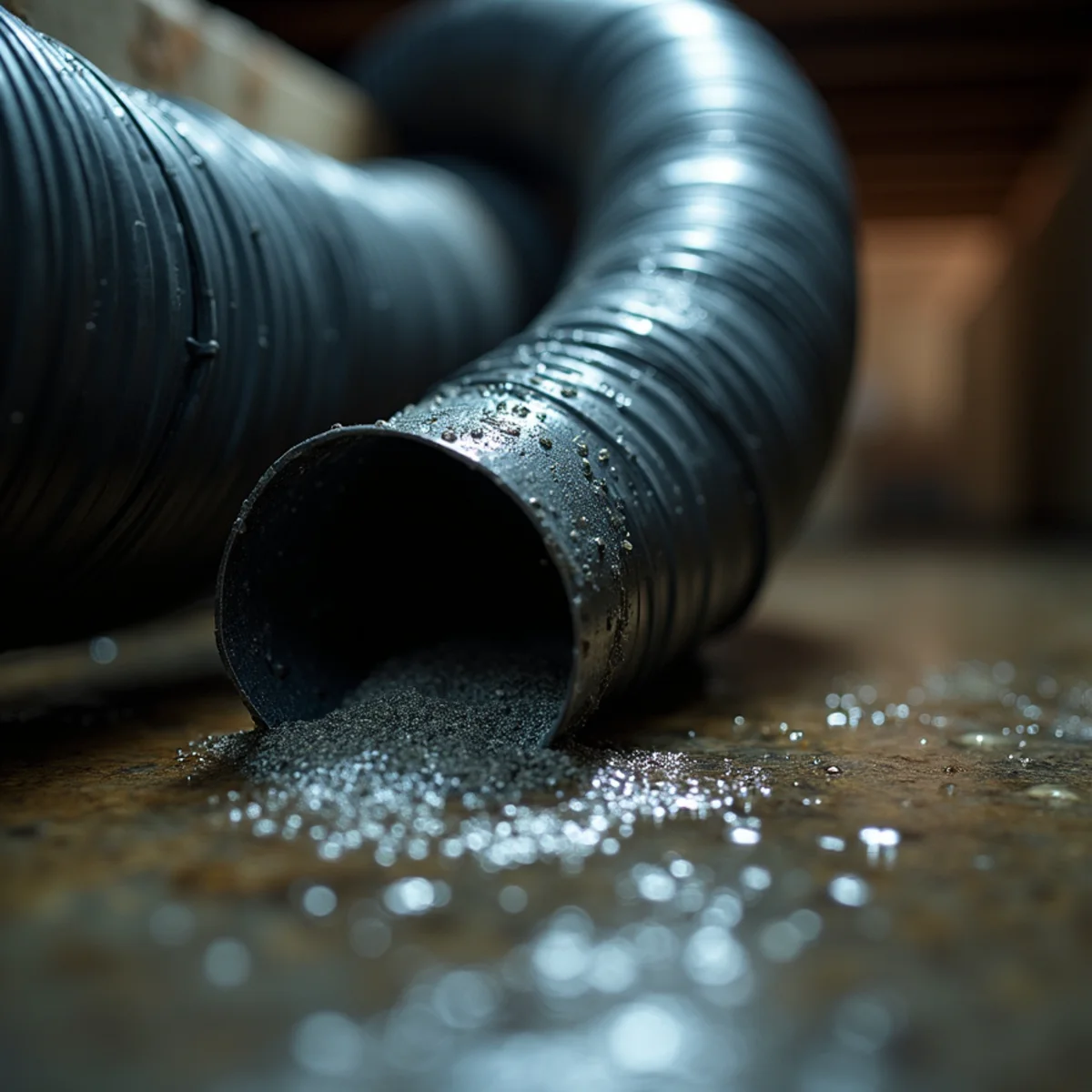
Sweating ducts or wet insulation
Cold supply ducts in a humid crawlspace collect condensation. Wet insulation sags, falls, and drips onto the soil.
Cupping or soft hardwood floors
Floors that swell or feel soft over the crawlspace often point to high moisture beneath them.
Heavy dust or pollen indoors
A yellow film on furniture during spring pollen season means the filter or return ducts are letting too much through.
Allergy symptoms that ease outdoors
When people feel better outside than in, dust mites, mold, or poor filtration may be to blame.
Why Crawlspace Humidity Matters in Burlington
Most homes in Alamance County sit over vented crawlspaces. In summer, outdoor air with dew points near 70 flows through those vents and meets cool surfaces underneath: ductwork, pipes, and the underside of the floor. The moisture condenses, and that's where many indoor air problems begin.
Wet insulation falls from ducts, joists grow mold, and the musty air rises into living spaces. Leaky return ducts in the crawlspace make it worse by pulling damp air directly into the HVAC system.
Air moves upward through a house as warm air escapes near the roof, a pattern called the stack effect. That means a meaningful share of the air you breathe on the first floor started out under it. Fixing the crawlspace is often the single biggest indoor air quality improvement a Burlington home can get, more than any gadget mounted on the air handler.
How the HVAC system gets involved
- Sweating supply ducts. Poorly insulated or leaky ducts collect condensation that drips onto soil and raises humidity further.
- Leaky returns. Returns under the floor pull crawlspace air into the home, carrying moisture, odors, and spores.
- Disconnected ducts. Separated duct joints can blow cold air straight into the crawlspace, cooling surfaces and causing more condensation.
- Oversized AC equipment. Systems that cool too fast don't run long enough to pull moisture out of the air.
Solutions We Provide
Whole-house dehumidification
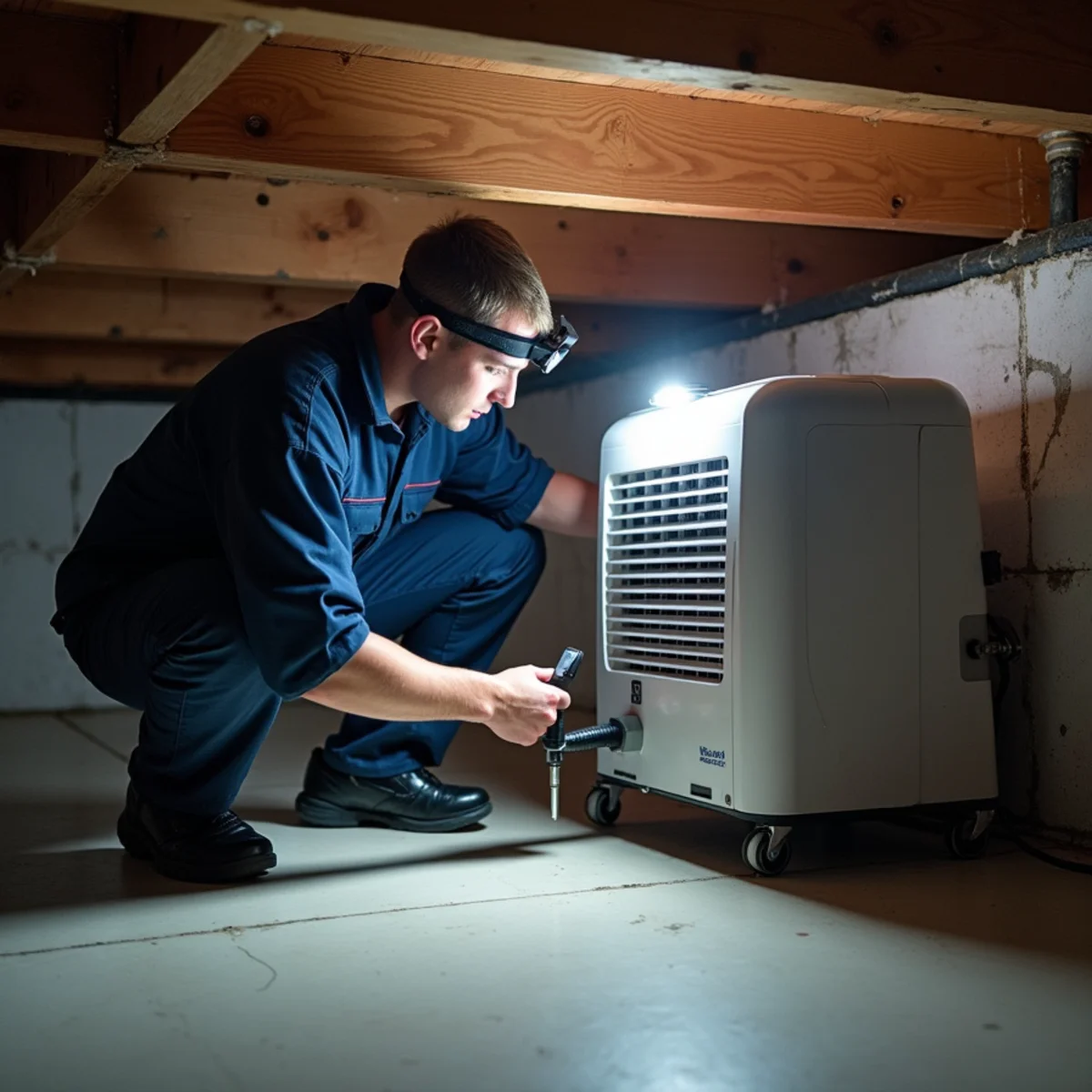
A whole-house dehumidifier connects to your ductwork and removes moisture independently from the AC. It works during mild, muggy spring and fall days when the AC barely runs. Indoor humidity between 40 and 50 percent is the goal for comfort and mold prevention.
Crawlspace dehumidifiers
In closed or partially sealed crawlspaces, a dedicated dehumidifier keeps moisture in check below the floor. When the ground itself is the moisture source, our crawlspace vapor barrier and encapsulation work stops it first, then the dehumidifier, drainage and ducts are sized for the drier space.
Duct sealing and insulation
We seal leaky joints with mastic, reconnect separated ducts, and replace wet or collapsed insulation. This often reduces humidity and odors immediately. See our ductwork repair and replacement service for more on this work.
Filtration upgrades
| Filter rating | What it catches | Best use |
|---|---|---|
| MERV 1-4 | Large dust and lint | Basic equipment protection only |
| MERV 8 | Pollen, dust mites, mold spores | Standard choice for most homes |
| MERV 11 | Finer particles, pet dander | Allergy households |
| MERV 13 | Smoke, fine dust, some bacteria | Best in a media cabinet sized for airflow |
Higher MERV filters restrict airflow if the system isn't designed for them. A 4-inch or 5-inch media cabinet gives you better filtration without choking the blower.
Air purification
UV lights aimed at the indoor coil and drain pan help control mold and slime on surfaces that stay wet all summer, which also keeps drains from clogging. We steer homeowners away from ozone-producing purifiers, since ozone irritates the lungs, and we'd rather spend your budget on moisture control and filtration that measurably work.
Serving Humid Homes Along the Haw River
Homes near the river in Haw River, Swepsonville, and Saxapahaw face some of the county's heaviest crawlspace moisture. We also help homeowners throughout Burlington with filtration and dehumidification. Regular HVAC maintenance keeps coils and drains clean, which also limits mold growth.
How moisture actually leaves your house air
Every humidity fix, whether it's the air conditioner or a dedicated dehumidifier, comes down to getting air colder than its dew point so water drops out. How well that happens depends on details most homeowners never see.
Coil temperature, airflow and dew point
Your indoor coil pulls water out only while its surface sits below the dew point of the air crossing it. Slower airflow lets the coil run colder and wring out more moisture, while faster airflow favors cooling over drying. When we test, we compare return and supply air readings. A small moisture difference between the two, or a condensate line that barely drips on a sticky afternoon, tells us the system is mostly moving heat, not water.
Why the fan setting matters so much
When the compressor shuts off, the coil is still wet. With the thermostat fan set to On, the blower keeps pushing air across that coil and evaporates much of the collected water right back into the house before it can drain. In a Burlington summer, switching the fan to Auto is one of the simplest humidity improvements available. Some systems also have a dehumidify setting that slows the blower during humid weather, which we can set up after checking airflow.
How a whole-house dehumidifier ties in
A ducted dehumidifier draws air from the return, runs it across its own cold coil and reheat coil, and sends it back warmer and drier. It needs a dedicated condensate path with a trap, its own filter, and a humidity control mounted in the living space rather than in the closet. Its capacity is rated in pints per day under a standard test condition, and we size it to the home's moisture load, not its square footage alone.
What's included in our indoor air quality assessment
An air quality visit should end with numbers and a ranked plan, not a brochure. Here's what we check and what you receive.
Humidity and dew point readings
We record temperature and relative humidity in the living space, at the return and under the floor, then compare dew points. That shows whether moisture is coming from the crawlspace, the air conditioner or daily living.
Return-side leak check
We inspect return plenums, panned joist returns and filter racks for gaps that pull crawlspace or attic air into the system. A leaky return undoes every filter upgrade you'll ever buy.
Static pressure test
A manometer reading across the filter and coil tells us how much restriction your system can handle before we recommend a higher-MERV filter or a media cabinet, so better filtration doesn't starve the blower.
Coil, drain pan and blower inspection
We look for biological growth on the evaporator coil, standing water in the pan and buildup on the blower wheel, the places where musty odors often start inside the equipment itself.
Dehumidifier and filtration sizing
If equipment is needed, we size a dehumidifier to the home's moisture load and pick a filter cabinet the ductwork can supply, rather than defaulting to the biggest model available.
A written plan ranked by impact
You get recommendations in order of what will make the biggest measurable difference, each priced separately, so you can start with the source fix and add equipment later if the readings still call for it.
How We Approach Air Quality Problems
- 1
Measure humidity
We check indoor and crawlspace humidity and temperature to see where moisture is building.
- 2
Inspect the crawlspace
We look at ducts, insulation, vapor barrier condition, and drainage for sources of moisture and leaks.
- 3
Evaluate the HVAC system
Equipment sizing, airflow, return duct integrity, and filtration all affect indoor air.
- 4
Written plan
You get recommendations in order of impact, with pricing for each option.
- 5
Install and verify
After installation, we measure humidity again, and we can leave a simple hygrometer so you can watch the numbers yourself through the season.
Air quality checks you can do vs. work that needs a pro
Several of the most useful air quality steps cost nothing and take minutes, while equipment changes need testing behind them.
Safe for you to check
- Place a hygrometer in two or three rooms and jot down readings at the same time each day for a week, so any fix has a baseline to beat.
- Set the thermostat fan to Auto during cooling season, then compare humidity readings a week later against your baseline.
- Run bathroom exhaust fans during and after showers, and confirm your kitchen range hood actually vents outdoors instead of recirculating into the room.
- Look behind the dryer and make sure the vent hose is connected and runs outside, since a loose dryer duct dumps lint and moisture indoors.
- Vacuum return grilles and keep furniture, rugs and curtains from covering them, so the system pulls air through the filter instead of around it.
Leave to a licensed tech
- Installing or servicing UV-C lampsUV-C light can burn eyes and skin, and lamps must be wired into the air handler with interlocks so they shut off when the panel opens.
- Changing blower speed or dehumidify settingsLowering airflow without measuring it can freeze the coil or overheat a heat pump in winter. The change needs static pressure and temperature readings to confirm.
- Tying a dehumidifier into ductworkThe unit needs correct supply and return connections, backdraft protection, a dedicated circuit and a trapped drain. Poor ducting sends humid air around the unit instead of through it.
- Cleaning a moldy coil or blower wheelCoil cleaners can damage aluminum fins or leave residue, and disturbing growth spreads spores. The work means pulling the blower and protecting the motor and controls.
What Affects Indoor Air Quality Costs
Costs depend on how much work the home needs and which solutions fit best.
- Type of dehumidifier
- Whole-house units connected to ducts cost more than standalone crawlspace units.
- Duct condition
- Minor sealing is simple. Replacing large sections of wet or collapsed ductwork adds cost.
- Filtration upgrades
- Media cabinets require modifying the return plenum, which adds labor.
- Crawlspace access
- Crawlspaces with low clearance, standing water, or debris make every task slower and sometimes need cleanup first.
- Drainage needs
- Dehumidifiers need a drain path, and some installs need a condensate pump.
You'll get a written quote before any work begins, and financing options are available for larger projects.
Red flags in indoor air quality sales pitches
Air quality is an easy place to sell equipment because the problem is invisible. These are the pitches worth slowing down on.
Ozone machines sold as air purifiers
Some devices clean by generating ozone, which irritates airways and can react with household chemicals to form other pollutants. If a purifier's literature talks about activated oxygen or doesn't clearly state its ozone output, ask for its certification before letting it into your ductwork.
One scary reading used to close a sale
A single particle count or mold swab taken during a sales visit proves very little on its own. Real diagnosis compares readings over time and between rooms, the crawlspace and outdoors. Ask what the number is being compared against.
Dehumidifier running in a vented crawlspace
Putting a dehumidifier under a home with open foundation vents asks it to dry the outdoors. It runs nonstop and barely moves the needle. Vents need closing and the ground covered first, or the equipment spend is wasted.
A bigger air conditioner to fix humidity
Upsizing the AC usually makes a muggy house worse, because a larger unit satisfies the thermostat quickly and shuts off before it removes much water. If humidity is the complaint, ask for dehumidification or airflow options before tonnage goes up.
Chemical fogging instead of finding moisture
Spraying sanitizer or biocide into ducts may mask odors for a while, but growth returns if leaks or humidity stay the same. Ask what caused the growth and how the proposal fixes that before paying for any treatment.
Why choose Littlejohn HVAC Solutions for indoor air quality
Crawlspace and HVAC in one visit
We install vapor barriers and crawlspace encapsulation as well as dehumidifiers and ductwork. One contractor sees the whole moisture path, from the soil to the supply register.
No gadget upselling
Reviewers repeatedly mention fair pricing and no upselling. If sealing a return or fixing a drain solves the problem, that's what we recommend before any add-on equipment.
Licensed, insured, and explains the why
Jesse is a licensed NC HVAC professional who shows homeowners the readings and simple habits, like pollen-season filter changes, that keep air cleaner between visits.
Free estimates for larger projects
Whole-house dehumidifiers, media cabinets and crawlspace work come with free, no-obligation written estimates and financing options, so you can plan the work in stages.
Indoor Air Quality near you
Humidity and pollen problems show up all over the Burlington area, but the causes change by neighborhood. We see tightly built newer homes in Mebane that trap moisture, older crawlspace houses in Graham and Gibsonville with leaky panned returns, rentals near Elon with neglected filters, and wooded lots in Chapel Hill and Hillsborough where spring pollen loads are heavy. Each assessment is built around the house in front of us.
We provide indoor air quality & crawlspace humidity throughout Burlington and Alamance County, including: