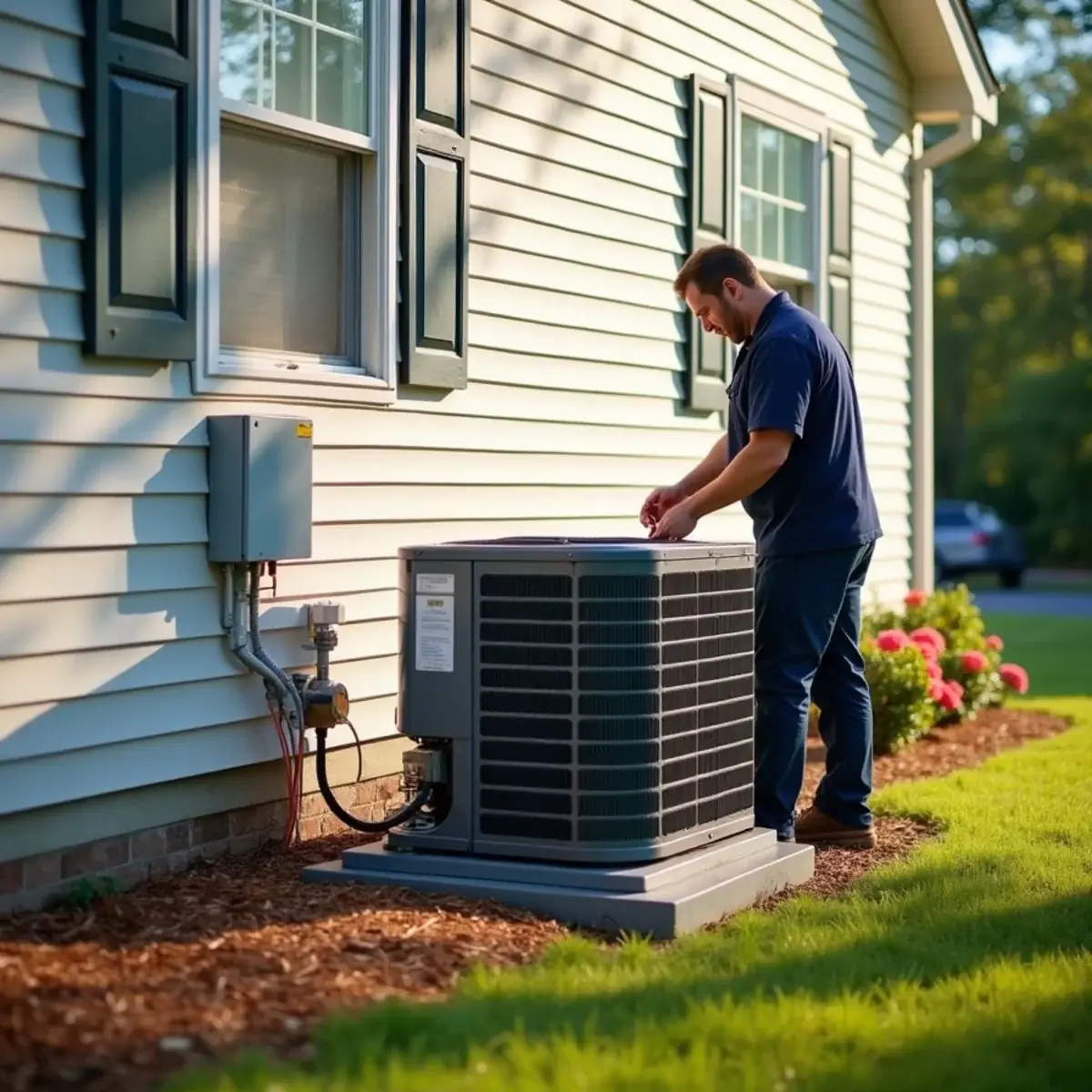
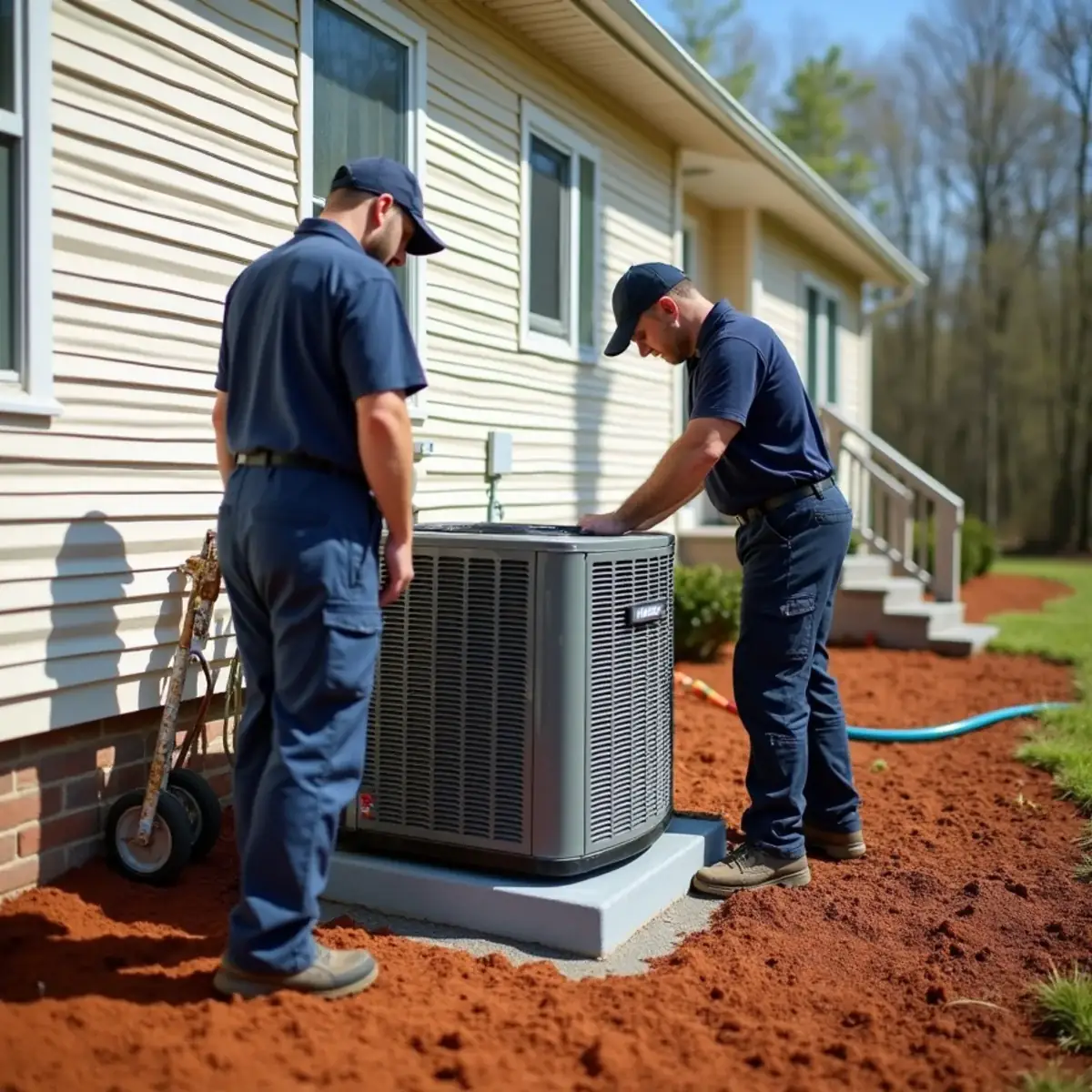
HVAC installation in Burlington, NC means replacing or adding a heating and cooling system that is sized to your house, matched indoor to outdoor, permitted and tested before we call it done. Littlejohn HVAC Solutions is owner-operated, so the person who measures your home is the same licensed tech who sets the equipment and starts it up. You get a free written estimate first, and financing is available if paying over time fits better.
Signs Your System Is Ready for Replacement
Age alone doesn't decide it. These are the patterns that tell us replacement deserves a serious look.
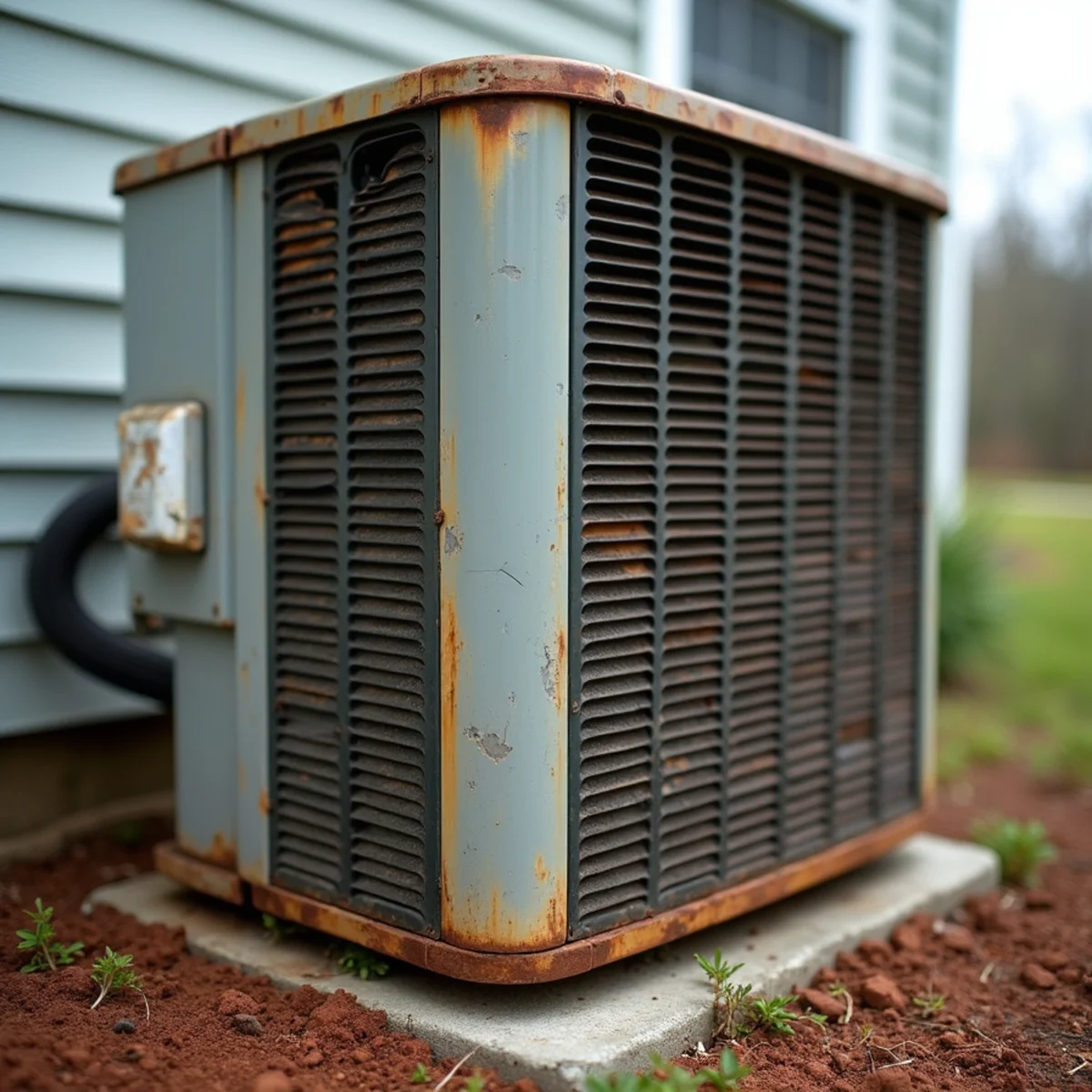
Repair bills are stacking up
When the last two years of repairs approach a third of what a new system costs, we'll put both paths in writing so you can compare them.
The equipment still runs on R-22
Most systems built before about 2010 use R-22, which is no longer manufactured in the U.S., so any leak means recharging with scarce reclaimed refrigerant.
Rooms never even out
A bonus room that stays five degrees warmer than the den is usually a sizing or duct design problem that a new condenser alone won't fix.
The house feels clammy at 74 degrees
If the thermostat is satisfied but the air still feels sticky, the equipment may be oversized and shutting off before the indoor coil has time to pull moisture out of the air.
Summer bills climb year after year
Worn compressors, dirty coils and leaky ducts show up on the power bill before they show up as a breakdown.
A major component has failed on an older unit
A dead compressor or cracked heat exchanger on equipment past 15 years usually tips the math toward replacement.
An HVAC Contractor in Burlington, NC Who Installs Complete Systems
Littlejohn HVAC Solutions is owner-operated. When you call about a new system, Jesse Littlejohn walks your house, writes the proposal and shows up on install day. No salesperson hands your job to a crew you've never met.
We install and replace full heating and cooling systems for homes and light commercial buildings across Burlington and Alamance County, including:
- Central air conditioners paired with a gas furnace or air handler
- Heat pump split systems, including variable-speed models, through our heat pump installation and repair service
- Dual fuel systems that run a heat pump most of the winter and switch to gas when it gets bitter cold
- Gas furnace replacements when the heat exchanger or control system is at the end of its life
- Packaged units for homes and small buildings without room for an indoor air handler
- New supply and return duct systems built alongside the equipment through our complete ductwork installation service
Sizing Starts With a Manual J Load Calculation
Many replacements here are sized by copying the old unit's tonnage, repeating whatever mistake was made twenty years ago. We run a Manual J load calculation using your square footage, insulation, window area, orientation and air leakage, then choose equipment capacity from the result.
Why oversizing backfires in a humid climate
Burlington summers bring long stretches of dew points in the 70s. An oversized air conditioner satisfies the thermostat quickly and shuts off before the coil can wring water out of the air, leaving a cool, damp house and a compressor worn down by constant starts. A correctly sized or variable-speed system runs longer, quieter cycles and holds humidity down.
Choosing the Right System for a Piedmont Home
Mild winters with a few hard cold snaps make heat pumps a strong fit for many homes, but gas still earns its place in some. Here's how the options compare:
| System type | Best fit | Winter heating | Worth knowing |
|---|---|---|---|
| Heat pump split system | Most all-electric homes | Efficient down into the 20s, electric strip backup below that | Rated by SEER2 for cooling and HSPF2 for heating |
| Gas furnace + central AC | Homes with natural gas service | Strong, fast heat regardless of outdoor temperature | Needs proper venting and combustion safety checks |
| Dual fuel | Gas homes wanting lower heating costs | Heat pump handles mild days, furnace takes over in deep cold | Changeover temperature is set at install |
| Packaged unit | Homes with no attic or closet space | Heat pump or gas-electric versions available | All components sit outside in one cabinet |
| Ductless mini-split | Additions and homes without ducts | Individual room heads, very efficient | Best as a targeted solution, not always whole-house |
Permits, Inspections and the Details That Get Skipped
Equipment replacements inside Burlington city limits require a mechanical permit and inspection, and county jurisdictions have their own. We pull the permit so you aren't left with an open one when you sell the house.
Install quality lives in the parts nobody sees in a brochure: a clean line set, a trapped condensate drain with a float switch, a level pad, sealed plenum connections and nitrogen-purged, pressure-tested brazing. We verify charge and airflow at startup instead of trusting the factory charge.
Installing Across Alamance County and Beyond
Most of our replacement work happens in Burlington, but we regularly install systems for homeowners in the older neighborhoods around HVAC service in Graham, NC, the newer subdivisions covered by our Mebane HVAC contractor page, and faculty and rental homes near campus in Elon, NC.
Financing options are available if spreading the cost makes more sense for your budget. The federal 25C tax credit ended for equipment installed after 2025, but your electric utility may still offer rebates on qualifying high-efficiency heat pumps. Ask us which models meet those tiers. Once your system is running, a seasonal maintenance plan keeps the investment performing.
What a properly commissioned install looks like, by the numbers
Manual S and Manual D: the two steps after the load calc
The Manual J result tells us how much heat the house gains and loses. Manual S is the next step: choosing a specific indoor and outdoor combination whose published capacity at our local design conditions covers that load, with enough latent capacity to handle Piedmont humidity. Manual D then checks whether the existing ducts can carry the airflow that equipment needs. Skip either step and a correctly sized condenser can still be starved by the duct system.
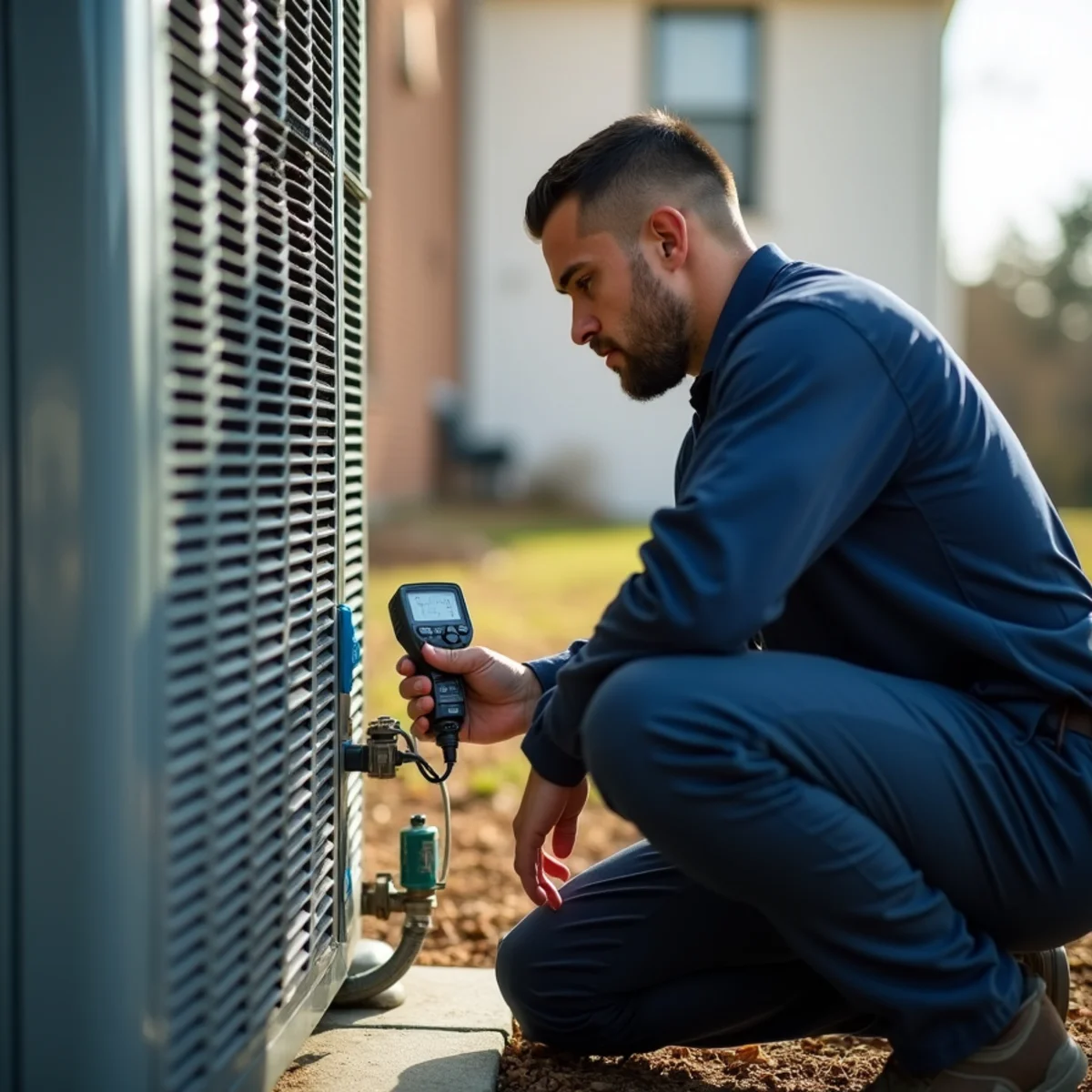
The vacuum, the charge and the airflow
- Evacuation below 500 microns, followed by a decay test. If the gauge climbs well past that after the pump is valved off, moisture or a leak is still in the line set, and we keep working until it holds.
- Airflow near 350 to 400 CFM per ton, often set toward the low end on humid-climate installs so the coil runs colder and pulls more water out of the air.
- Total external static pressure within the blower's rating, commonly around 0.5 inches of water column on residential equipment. A reading far above that means ducts or the filter are choking the new system on day one.
- Subcooling on TXV systems and superheat on fixed-orifice systems, compared with the manufacturer's chart after the equipment has run long enough to stabilize.
Electrical details that decide how long it lasts
Every condenser data plate lists a minimum circuit ampacity and a maximum overcurrent protection rating, and the breaker and wire must fall inside those numbers. Reused undersized wire runs warm, while an oversized breaker won't protect the compressor. We also confirm the thermostat cable has enough conductors for staging and a common wire, because a two-stage or variable-speed system wired through an old four-wire cable loses the features you paid for.
What's included in our HVAC installation
A new system is only as good as the day it goes in. These are the pieces every installation quote from us covers, listed so you can compare them line for line against any other bid.
Matched indoor and outdoor equipment
We quote condensers, heat pumps, coils, furnaces and air handlers as a matched set listed together in the AHRI directory, so the efficiency rating printed on your proposal is the one the system can actually reach in your home.
Removal and disposal of the old system
Refrigerant is recovered from the old unit into a recovery cylinder rather than vented, and the old condenser, furnace or air handler is hauled off. You are not left with a rusting cabinet beside the house.
Line set, pad and electrical connections
We decide whether the existing copper line set can be flushed and reused or should be replaced, set the outdoor unit level on a new pad or risers, and connect a properly sized disconnect and whip.
Condensate protection built in
Every indoor coil gets a trapped primary drain, and attic or closet installs get a float switch or secondary pan so a clogged line shuts the system off instead of staining a ceiling.
Thermostat setup for the equipment you bought
Heat pump, dual fuel and two-stage systems all need the thermostat configured to match. We set staging, backup heat lockouts and fan settings before we leave rather than leaving the factory defaults.
Startup readings and paperwork
You get a written record of refrigerant pressures, temperature split, static pressure and gas pressure where it applies, plus the model and serial numbers you need to register the equipment with the manufacturer.
How a Replacement Works With Us
- 1
In-home assessment
Jesse inspects the equipment, ductwork, electrical service and drainage, and asks about hot rooms and humidity.
- 2
Load calculation and written options
We run the Manual J numbers and give you written options with equipment, efficiency ratings, duct or electrical changes and everything included, so nothing is vague.
- 3
Permit and scheduling
Once you choose, we pull the permit, set an install date and phone you that morning when we're headed over.
- 4
Installation day
Old equipment comes out and is disposed of properly. New equipment is set, brazed under nitrogen, pressure-tested, evacuated with a micron gauge and wired to code.
- 5
Startup and walk-through
We confirm charge, airflow, temperature split and drainage, clean up completely, then walk you through the thermostat, filter changes and what to watch for.
What you can check yourself vs. what needs a pro
Before you collect replacement quotes and after install day, a few checks are yours to make, and the rest belongs to a licensed installer.
Safe for you to check
- Photograph the data plates on your indoor and outdoor units so model numbers, manufacture dates and refrigerant type are handy when you compare replacement quotes.
- Walk the house on a hot afternoon with an inexpensive thermometer and note which rooms run warm, so the load calculation and duct plan can target them.
- After the install, confirm the condensate line drips outside or into a pump, and check that the secondary pan under an attic unit stays dry for the first few weeks.
- Register the new equipment with the manufacturer using the serial numbers on your paperwork, since many manufacturers require registration within a set window after installation.
Leave to a licensed tech
- Sizing with Manual J and SCapacity depends on insulation, windows, duct location and latent load. A wrong guess locks in years of humidity problems or short cycling that no thermostat setting can correct.
- Brazing and evacuating the line setRefrigerant handling requires EPA Section 608 certification, and brazing without a nitrogen purge leaves scale inside the copper that later clogs metering devices and damages compressors.
- Matching breaker and wire sizeMeeting the nameplate ampacity and overcurrent limits is electrical code work. Undersized wire overheats, and the wrong breaker can let a shorted compressor keep drawing current.
- Furnace venting and gas connectionsA new furnace may need a different vent size or material than the old one. Incorrect venting can spill carbon monoxide indoors, and gas piping falls under state fuel gas code.
What Shapes the Cost of a New System
Two houses of the same size can land at very different numbers. These are the factors that move a replacement quote the most.
- System type and efficiency rating
- Single-stage, two-stage and variable-speed equipment are priced very differently. Higher SEER2 and HSPF2 ratings cost more up front and less to run.
- Capacity from the load calculation
- Tonnage and furnace BTU size follow the Manual J result, not the old unit's label.
- Condition of the ductwork
- Sound ducts can be reused after sealing. Crushed, undersized or disconnected runs may need partial or full replacement.
- Electrical and gas work
- Some upgrades need a new breaker or wire size, and furnace swaps can require venting changes.
- Line set, pad and drainage
- Replacing an old copper line set, raising the outdoor unit or adding a condensate pump all affect the total.
- Accessories you choose
- Smart thermostats, dehumidifiers and upgraded filtration are optional, listed separately.
Every replacement starts with a written quote that lists equipment, labor, permits and extras before any work begins. You decide with the full picture, and financing options are available if you need them.
Red flags in HVAC replacement quotes
Two bids for the same house can look alike on paper and describe very different jobs, so these are the gaps worth asking about.
Tonnage copied from the old unit's label
If the quote matches your old system's size exactly and nobody measured windows, insulation or ceiling heights, the load calculation didn't happen. Ask to see the Manual J report. A real one lists heat gain and heat loss room by room, not a single number for the whole house.
No mention of the ductwork at all
A quote that never mentions ducts assumes they are fine. If nobody went into the crawlspace or attic, measured static pressure or looked at the return, the new system inherits every leak and restriction the old one had. Ask what the static reading was and whether duct changes are included.
Old line set reused without a plan
Reusing copper can be fine when it is the right size and gets flushed and pressure-tested. It becomes a problem when an R-22 line set with old mineral oil residue is simply connected to new equipment. Ask whether the lines will be flushed, tested under nitrogen or replaced, and why.
Efficiency ratings with no model numbers
A proposal that promises a high-SEER2 system without listing model numbers leaves room to substitute cheaper equipment later. Every line should name the outdoor unit, the indoor coil or air handler and the furnace by model, so you can verify the ratings yourself and compare bids fairly.
Why choose Littlejohn HVAC Solutions for HVAC installation
Installation is our core work
Residential and light commercial installation, along with complete duct replacement, is what Jesse built the business around. He has over a decade of hands-on experience putting systems in, not just servicing them.
Free estimates with no pressure
Quotes are free and in writing. If a repair would honestly buy you several more good years, we will say so, because replacing what can still be fixed is not how we earn repeat customers.
Finished on schedule and cleaned up
Reviewers mention a full system and ductwork replacement that wrapped up sooner than quoted, with the house left clean. That is the standard for every install day, not a special occasion.
Financing on new systems
Financing options are available on new systems, and we also accept cash, Venmo, Cash App and Zelle. We go over the terms alongside the quote so there are no surprises at the end.
HVAC Installation near you
Most of our installations happen in Burlington, but we set new systems for homeowners throughout the region. Newer subdivisions in Whitsett and Gibsonville often need a first replacement with builder-grade ducts corrected at the same time. Older homes in Swepsonville and Hillsborough tend to need crawlspace work before the new equipment goes in, and growing neighborhoods around Mebane keep us busy with heat pump replacements. We cover roughly a 50-mile radius from Burlington.
We provide HVAC installation & replacement throughout Burlington and Alamance County, including: