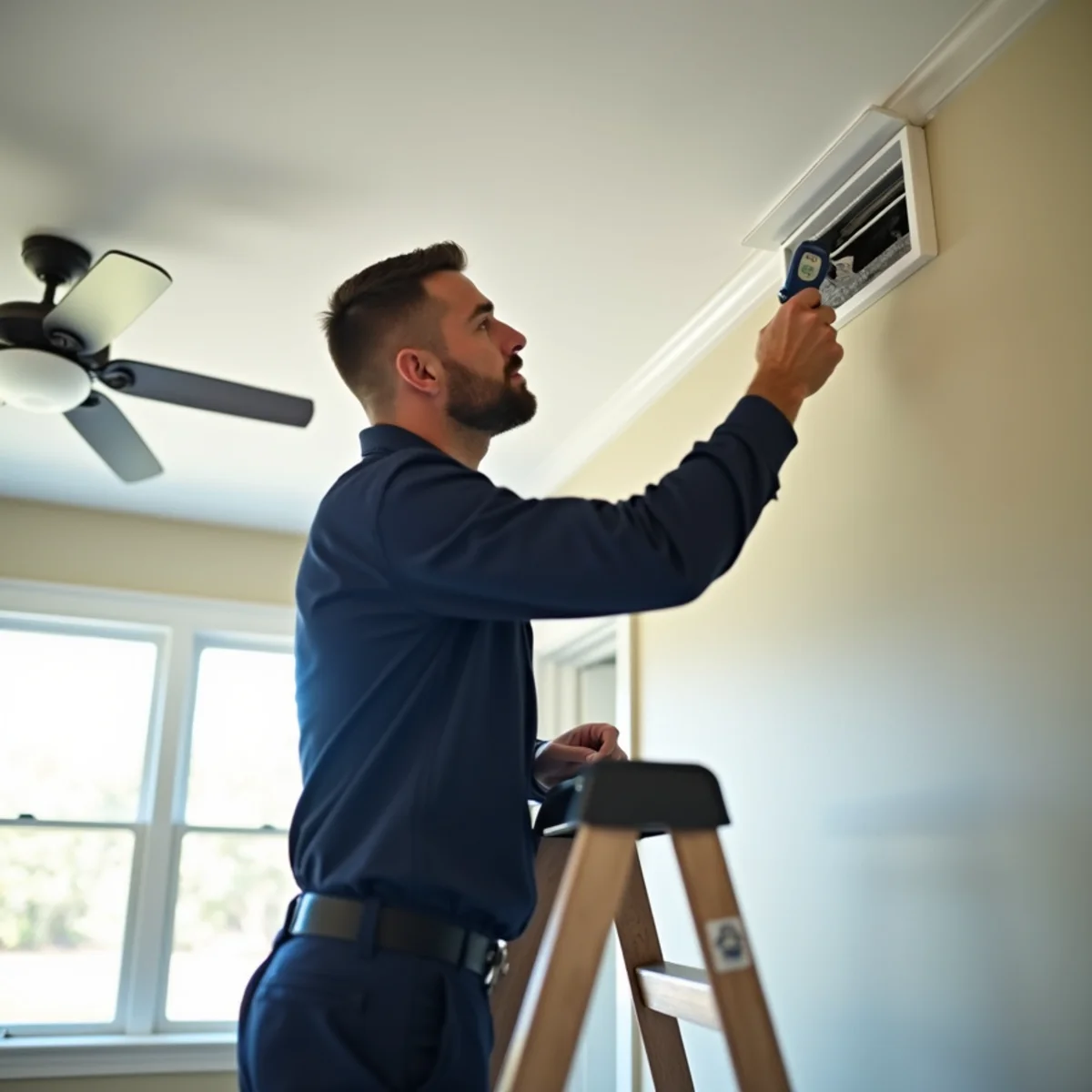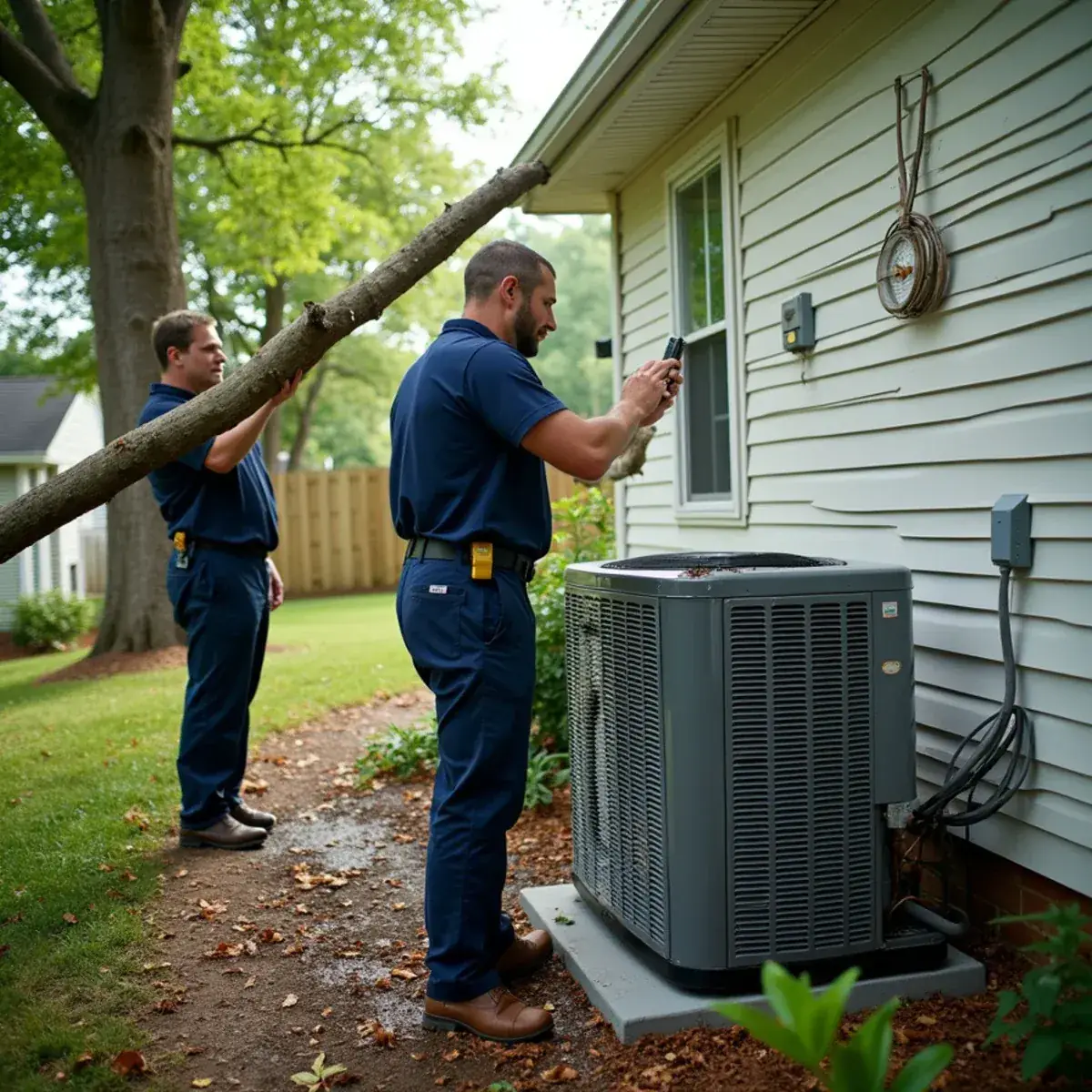
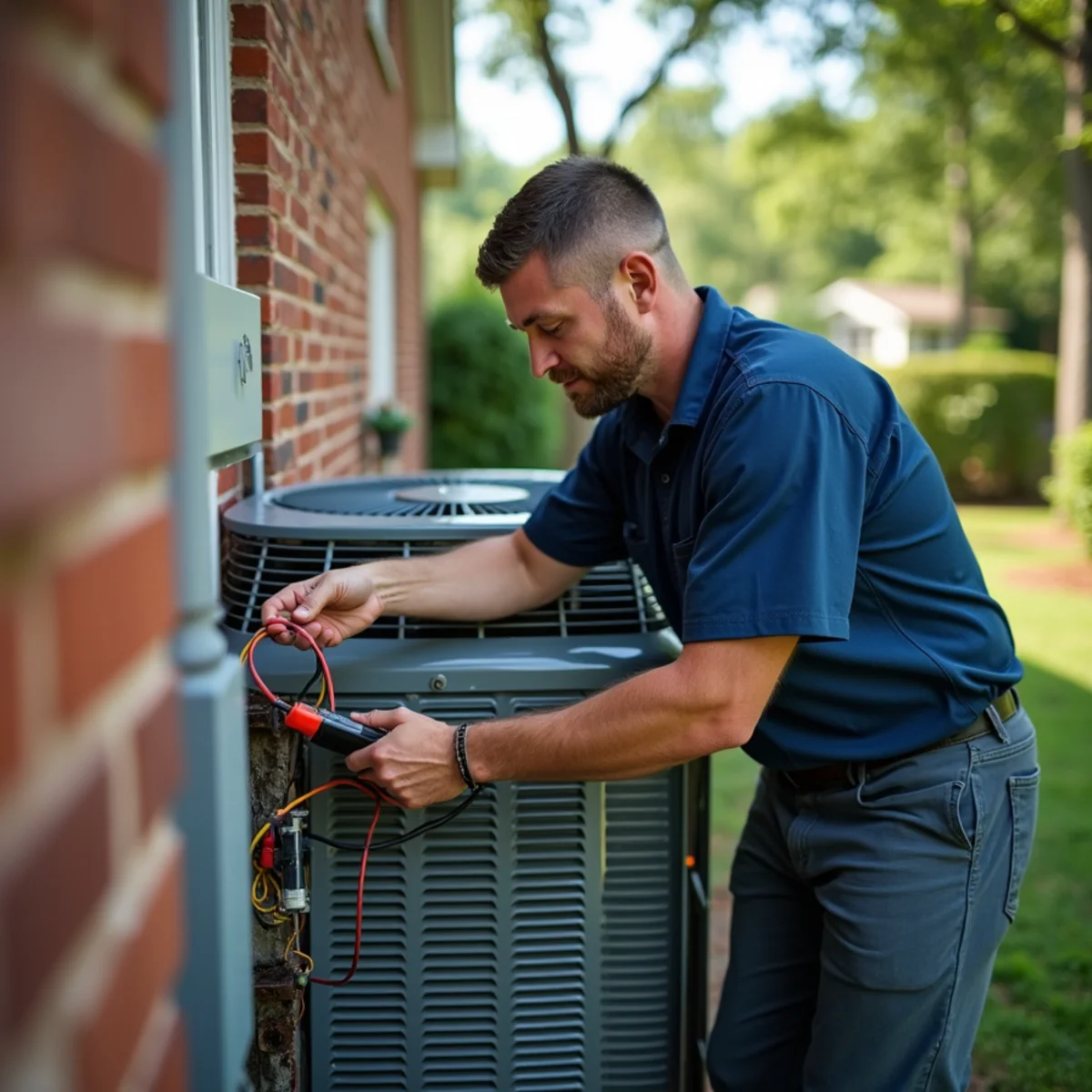
AC repair in Burlington, NC should start with a real diagnosis, not a parts swap. Jesse Littlejohn tests the electrical components, refrigerant charge, airflow and drainage, tells you what failed and puts the price in writing before any work begins. Most calls get same-day service, and we call ahead when we are on the way.
Signs Your Air Conditioner Needs Repair
Most AC failures give some warning first. Catching these early is often the difference between a small part and a bigger bill.
Warm air from the vents
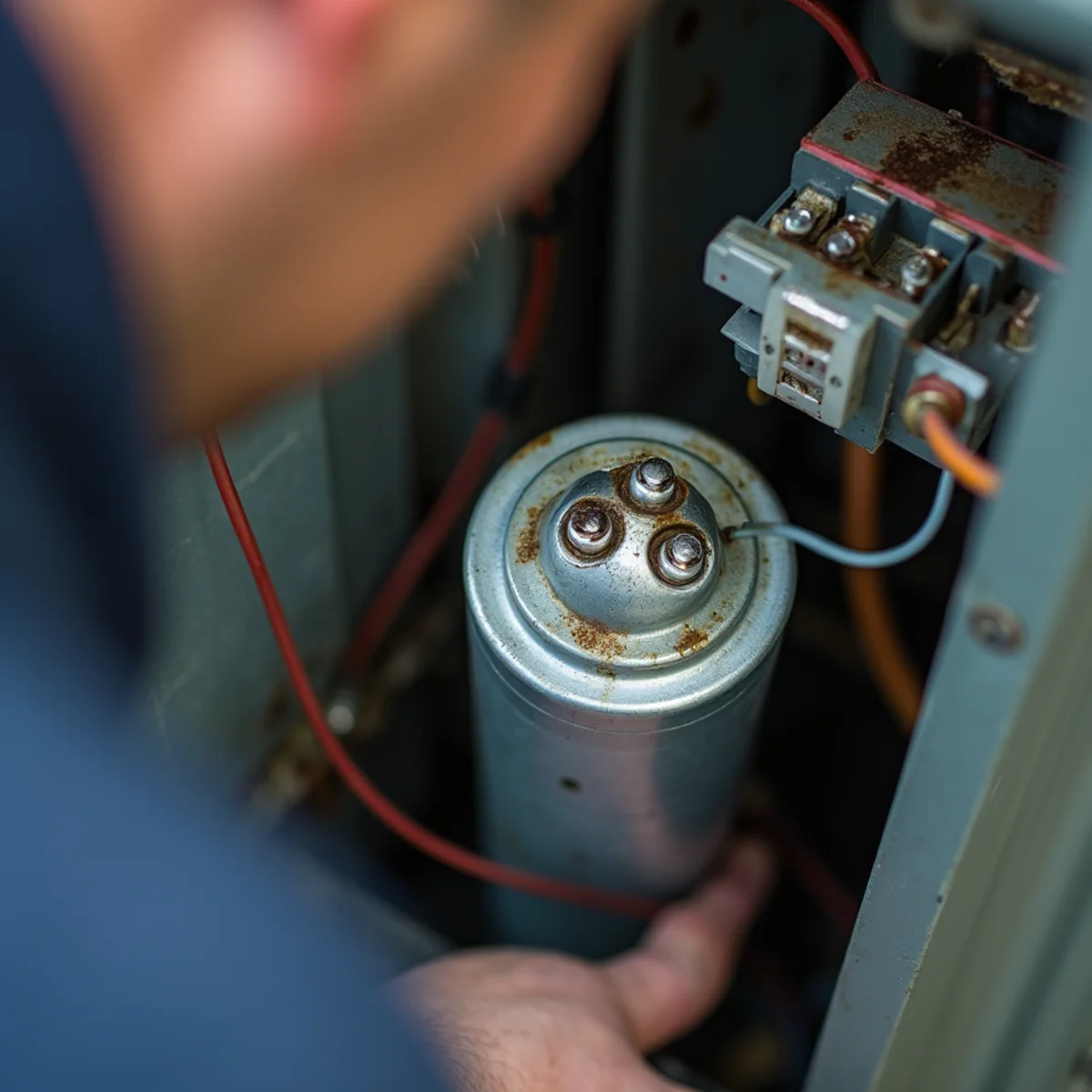
The indoor blower runs but the air isn't cool. Common causes include a failed capacitor or contactor at the outdoor unit, a tripped disconnect or low refrigerant charge.
Outdoor unit hums but the fan won't spin
That usually points to a weak run capacitor or a seized condenser fan motor. Shut the system off at the thermostat so the compressor doesn't overheat.
Ice on the copper lines or indoor coil
Frost on the larger suction line means the coil is too cold, often from a clogged filter, a weak blower or low charge. Switch to fan-only to let it thaw before we arrive.
Water around the indoor unit
A clogged condensate line or cracked drain pan will back water up into the ceiling, closet or crawlspace. Many systems have a float switch that shuts cooling off when this happens.
Short cycling
A unit that starts and stops every few minutes wears out the compressor and leaves the house humid. Thermostat placement, low charge and oversizing are typical culprits.
Clicking, buzzing or grinding
Chattering contactors, arcing wire connections and failing motor bearings all make noise before they fail completely.
AC Repair That Starts With an Honest Diagnosis
A lot of our AC calls come from homeowners who've already been told they need a new system. Sometimes that's true. Often it isn't. More than one customer has come to us after multiple opinions pointed to replacement, and the real problem turned out to be a single failed component that Jesse found and fixed that day.
We diagnose with instruments, not guesses. That means checking capacitor readings against their rated microfarads, measuring amp draw on the compressor and fan motor, reading superheat and subcooling to judge charge, and checking temperature drop across the indoor coil. You'll know what failed, why it failed and what it costs before we touch a wrench.
The Repairs We Make Most Often
| What you notice | Likely cause | Typical repair |
|---|---|---|
| Fan and compressor won't start | Failed dual run capacitor or burned contactor | Replace capacitor or contactor, check wiring |
| Blowing warm, outdoor unit running | Low refrigerant from a leak | Locate leak, repair, evacuate and recharge |
| Ice on lines or coil | Restricted airflow or low charge | Clear filter or blower issue, correct charge |
| Water in the closet or ceiling | Clogged condensate drain or pan | Clear and flush drain, add float switch |
| System trips the breaker | Shorted compressor or failing motor | Electrical testing before any part is replaced |
Refrigerant leaks
Refrigerant doesn't get used up. If a system is low, it's leaking. Topping it off without finding the leak just buys a few weeks. We use electronic leak detection and bubble testing to find the source, which is often a rubbed-through line, a Schrader valve core or a pinhole in the evaporator coil. Refrigerant work requires EPA Section 608 certification, and it's handled accordingly.
Condensate drain problems
In our climate an air conditioner can pull several gallons of water out of the air on a humid day. Algae and pollen dust grow in the drain line, and when it clogs, water goes somewhere it shouldn't. Clearing the line, flushing the trap and confirming the safety switch works is a routine but important part of cooling repair here.
Why Burlington Summers Are Hard on Air Conditioners
Heat alone isn't the whole story. Our humidity keeps the indoor coil wet for months, spring pine pollen coats outdoor condenser coils, and long stretches in the 90s mean the compressor rarely rests. Capacitors that were marginal in May tend to give out in the first heat wave of July.
That's why a lot of what we fix could have been caught at a spring AC tune-up and maintenance visit. When we're done with a repair, Jesse will show you the simple things worth checking yourself, like the filter and the drain line, so the same problem is less likely to come back.
When a Repair Stops Making Sense
We don't push replacement, but we won't hide the numbers either. If your unit is past 15 years old, uses R-22 or needs a compressor, we'll price the repair and show you what a new air conditioning system installation would cost so you can decide with both figures in front of you.
If you're without cooling and someone in the house is elderly, very young or medically fragile, tell us when you call. Those calls go through our emergency AC repair service. We cover Burlington plus nearby Elon, Gibsonville and Haw River, and we call ahead so you know when we're on the way.
What the gauges and meters tell us on an AC call
Reading superheat and subcooling together
One refrigerant number on its own can mislead. We read both and look at the pattern they make:
- High superheat, low subcooling: the system is short on refrigerant, which almost always means a leak somewhere.
- High superheat, high subcooling: refrigerant is stacking up behind a restriction such as a clogged filter drier or a sticking TXV. Adding refrigerant here makes things worse.
- Low superheat, high subcooling: overcharged, often from an earlier top-off done without weighing the refrigerant or measuring the result.
- Low superheat with normal subcooling: usually weak airflow across the indoor coil, so we check the blower and filter before anyone touches the charge.
Testing a compressor before condemning it
A compressor that won't start isn't necessarily dead. When one overheats, its internal overload opens, and it can take an hour or more to cool and reset, which looks exactly like a failure. We measure resistance across the common, start and run terminals, where the two smaller readings should add up to the largest one. An open winding, a short to ground or numbers that don't add up confirm a real failure. A compressor that tests sound but struggles to start may only need a new capacitor or a hard-start kit.
Why a capacitor that works can still be failing
Run capacitors carry a tolerance, commonly plus or minus 5 or 6 percent of the printed rating. One reading well below that range may still start the unit on a cool June morning, then quit on a 95-degree Burlington afternoon when head pressure peaks. We test against the rating rather than asking whether it merely runs, and we look for a domed top or oil residue that shows it's on the way out.
What's included in our AC repair visit
Every cooling repair call covers the whole system, because the part that failed is often only half the story. Here is what we check and hand back to you.
Electrical testing at the condenser
We read line voltage at the disconnect, test the run capacitor against its rated microfarads, inspect contactor points for pitting and check every wire lug for heat damage before deciding what to replace.
Refrigerant charge verification
Charge is judged with gauges or digital probes using superheat or subcooling, depending on the metering device. If it is low, we tell you a leak exists and discuss finding it rather than quietly topping it off.
Airflow check at the indoor unit
A dirty filter, matted blower wheel or closed returns can mimic a refrigerant problem. We look at the filter, blower and evaporator coil face and measure supply and return temperatures to rule airflow in or out.
Condensate line and safety switch
We confirm the drain is flowing, the trap is clear and the float switch actually cuts power when the pan fills. A switch that never trips is how ceilings get ruined in August.
Motor amp draw and bearing check
Compressor and condenser fan motor amperage are compared against the data plate, and we spin the fan by hand with power off to feel for dragging bearings before they seize.
A written record of what we found
You keep a note of the failed part, the readings before and after the repair, and anything else that is wearing. That record helps the next repair-or-replace conversation happen on facts.
What Happens on an AC Repair Call
- 1
You call, we schedule
Tell us what the system is doing. Most calls get same-day service, and a photo of the outdoor unit or thermostat by text can help us arrive with the right parts.
- 2
Full diagnostic
We test electrical components, refrigerant pressures, airflow and drainage to find the actual cause, not just the first symptom.
- 3
Written options
You get the diagnosis and price in writing before any work. If there's more than one reasonable path, we lay them out.
- 4
Repair and test
We make the repair, then run the system and confirm temperature split, amp draw and drainage are where they should be.
AC checks you can make before calling vs. what needs a technician
A few quick checks can save a service call or at least speed one up, and none of them involve opening an electrical panel or a unit cover.
Safe for you to check
- Confirm the thermostat is set to Cool, the setpoint is below the room temperature, and the batteries aren't dead if the display looks blank or dim.
- Pull the filter and hold it up to a light. If you can't see through it, replace it and give an iced coil a few hours on fan-only to thaw.
- Watch the outdoor unit while it should be running and note whether the fan spins or you only hear a hum, then text us a short video.
- Look at the float switch or secondary drain pan near the indoor unit, because standing water there explains a system that shut itself off.
Leave to a licensed tech
- Replacing capacitors and contactorsCapacitors can hold a charge after the power is off and deliver a dangerous shock. Safe discharge, matching the rating and correct wiring are electrical work for a trained technician.
- Adding or recovering refrigerantFederal rules require EPA Section 608 certification to handle refrigerant, and charging by feel instead of by superheat, subcooling or weight shortens compressor life.
- Finding and repairing leaksLocating a pinhole takes electronic detectors, bubble solution or a nitrogen pressure test, and the repair means brazing and pulling a deep vacuum before recharging.
- Condemning or replacing a compressorWinding and ground tests need meters and experience. Mistaking a tripped overload for a dead compressor can turn a modest repair into a needless system replacement.
What Affects the Cost of AC Repair
Most AC repairs fall into a handful of categories, and the price depends on which one you're dealing with.
- The failed part
- A capacitor or contactor is a modest repair. A condenser fan motor, evaporator coil or compressor is a significant one.
- Refrigerant type and amount
- R-410A and newer refrigerants cost far less to recharge than R-22. Leak repair plus recharge is priced by the pound and labor.
- Leak location
- A leak at an accessible valve is quick. A leak inside the evaporator coil may mean replacing the coil.
- Equipment access
- Air handlers in tight attics or low crawlspaces take more time to work on safely than units in a closet.
- Warranty status
- If a part is still under manufacturer warranty, you may only pay labor. We check your model and serial number.
You'll see the diagnosis and a written price before we start any repair. If the numbers point toward replacement, we'll tell you plainly and leave the decision to you.
Red flags on an AC repair ticket
Most repair bills are honest, but a few patterns deserve a second question before you pay or approve more work.
Refrigerant added with no leak mentioned
If a tech adds refrigerant and says nothing about where the old charge went, you are paying for a top-off that will leak out again. Ask how many pounds went in, what the superheat or subcooling readings were before and after, and where the leak probably is.
A dead compressor diagnosed in five minutes
A compressor that won't start on a hot day may be sitting on a tripped internal overload or a weak capacitor. If you hear the words new system before anyone has measured winding resistance and checked for a short to ground, ask for a second look.
Parts replaced one after another
A capacitor, then a contactor, then a fan motor on back-to-back visits suggests guessing instead of testing. Each part should be justified by a reading. Ask what measurement showed that part had failed, and ask to keep the old part so you can see it.
Leak sealant offered as the standard fix
Leak-stop products get pushed as a cheap alternative to locating the leak. They can clog metering devices and contaminate service equipment, and many equipment makers discourage them. If one is recommended, ask why the leak can't be found and repaired directly instead.
Why choose Littlejohn HVAC Solutions for AC repair
Honest diagnosis, even when others said replace
One reviewer had heard from three other techs that she needed a new unit. Jesse found the real fault and fixed it. We give the same straight answer on every cooling call.
Same-day on most calls
Reviewers describe cooling restored within 20 to 30 minutes. We cannot promise that every time, but most AC calls get worked into the same day.
No upselling
Customers mention fair pricing and a tech who only recommended what the system needed. You get the repair price in writing, and optional add-ons are never slipped into the ticket.
Tips so it doesn't happen again
Jesse shows homeowners simple things like where the drain cleanout is and how to spot a clogged filter, so a repeat breakdown is less likely next summer.
AC Repair near you
From our base in Burlington we handle cooling repairs across Alamance County and beyond. Brick ranches in Graham and newer homes around Mebane make up a big share of our summer calls. Rural properties near Swepsonville and Ossipee often have condensers sitting in tall grass that chokes the coil, and many single-story homes in Green Level run air handlers in tight crawlspaces. Wherever you are within about 50 miles, the repair is priced the same honest way.
We provide AC repair throughout Burlington and Alamance County, including: