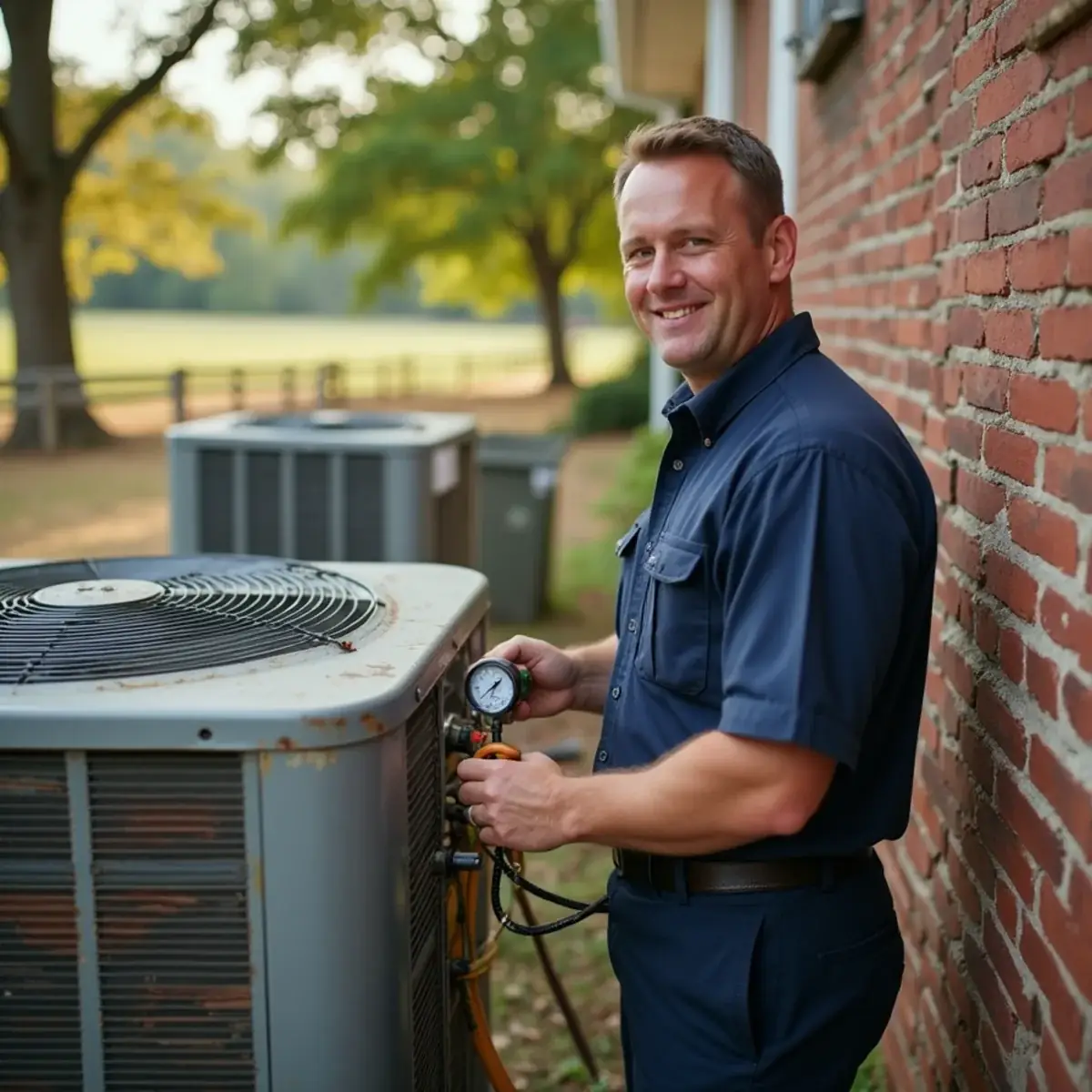
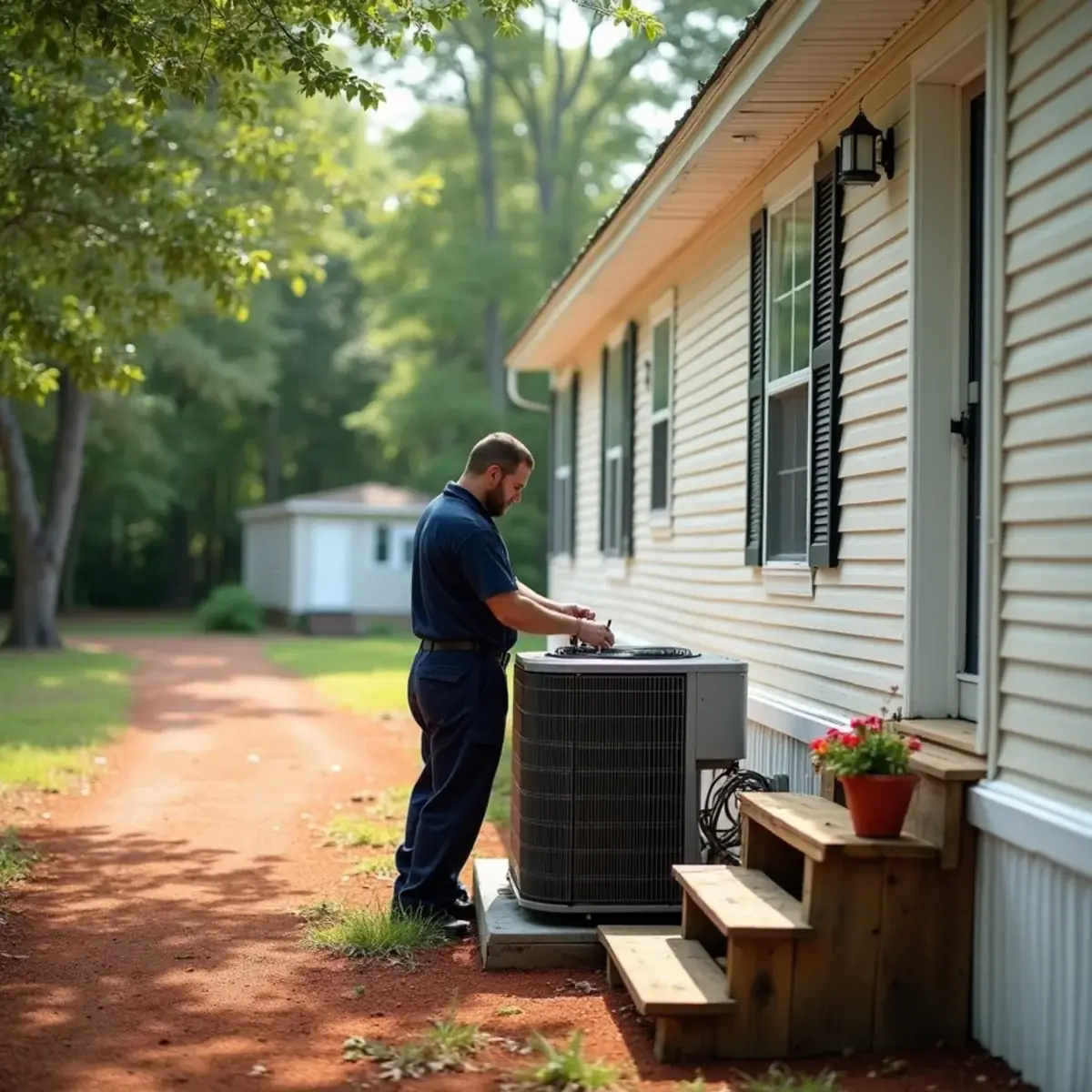
Mobile home HVAC in Burlington, NC covers the furnaces, heat pumps, packaged units and under-floor ducts built specifically for manufactured housing. We install only HUD-approved equipment, repair belly and crossover ducts the right way, and give you a free written estimate before any work starts.
Common Mobile Home HVAC Problems
Most manufactured home comfort complaints come back to a short list of issues under the floor.
Weak airflow at the far end
The main trunk runs down the center of the home in the belly. Crushed sections, loose end caps, or separated joints starve the rooms at the end of the run.
One half of a double-wide stays hot or cold
The crossover duct connecting the two halves often sags onto the ground, collapses, or fills with water. The half it feeds suffers first.
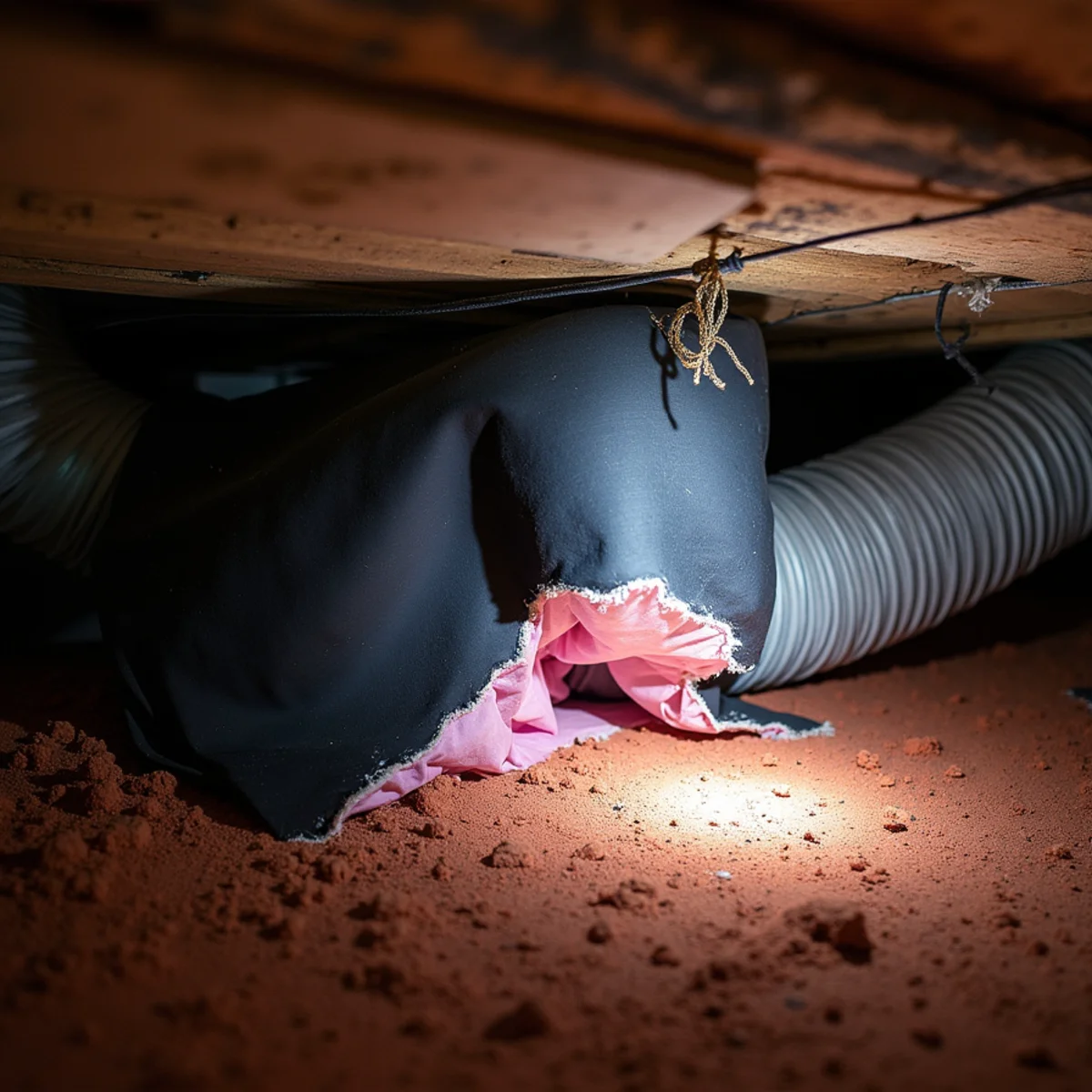
Torn or sagging belly board
Rodents, plumbing leaks, and old repairs tear the underbelly. Insulation falls out, ducts lose support, and the floor gets cold.
Musty smell when the system runs
Ducts under the floor pull moisture and odors from damp soil when joints are open, especially where skirting vents are blocked.
High bills and a system that runs constantly
Leaky belly ducts can dump a big share of heated or cooled air under the home before it ever reaches a register.
How Manufactured Home HVAC Is Different
Manufactured homes are built to the federal HUD Code, not the residential building code used for site-built houses. That affects which furnaces can be installed, how ducts are routed, and how combustion air is supplied. Treating a mobile home like a regular house is how a lot of bad installs happen.
Belly-board ductwork
Most single-wides and double-wides have a main supply trunk running lengthwise under the floor, wrapped in insulation and held up by the belly board, a woven fabric or fiberboard barrier that seals the underside of the home. Floor registers tap directly off that trunk. When the belly board tears or the trunk separates, conditioned air escapes into the crawl area and outside air leaks in.
Crossover ducts
Double-wide and triple-wide homes connect each section with a flexible crossover duct that runs under the home. These are the most failure-prone parts of the system. They lie on the ground, collect water, get chewed by animals, and flatten over time. Replacing a crossover with a properly supported, insulated duct is one of the most effective fixes we make.
Return air
Many manufactured homes have no ducted return. Air comes back to the furnace through a louvered closet door or grilles in the hallway. If that door is blocked or someone swaps in a solid door, airflow drops and equipment strains.
Equipment We Install and Service
| Equipment | Where you'll find it | What to know |
|---|---|---|
| Manufactured-home gas or electric furnace | Hall closet, usually downflow | Must be HUD-approved for manufactured homes with sealed combustion |
| Add-on AC or heat pump coil | Sits below the furnace in the closet | Must match the outdoor unit and the furnace blower |
| Split heat pump | Outdoor unit on a pad beside the home | Common upgrade over electric furnaces and strip heat |
| Packaged heat pump or AC | All-in-one cabinet outside the home | Ducts connect directly into the belly trunk through the skirting |
Manufactured-home furnaces use sealed combustion, drawing air from outside and venting through the roof, because the closet has no room for combustion air. Installing a standard residential furnace in its place is a code and safety problem. We only install equipment labeled for manufactured homes.
Packaged units
Packaged units sit beside the home with supply and return ducts running through the skirting into the belly. They free up the furnace closet and keep all the mechanical equipment outside. The connection points between the unit and the home need careful sealing and support, since settling and shifting can pull them apart.
Mobile Home HVAC Around Burlington
Manufactured homes are common throughout rural Alamance County, especially around Green Level and in the parks and country lots near Swepsonville. We serve homes across Alamance County and nearby areas, and most service calls can be scheduled within the same day or next.
If your mobile home has an older electric furnace, upgrading to a heat pump system often cuts heating costs significantly. For torn belly boards and failing crossovers, we handle duct repair and replacement right alongside equipment work. If an older manufactured-home gas furnace won't ignite, our furnace repair service covers those models too.
In the closet and under the floor: where manufactured-home systems wear out
A manufactured home packs its heating and cooling into tight spaces, and that compact design creates failure points a site-built house rarely has. Three of them account for a large share of our diagnostic time.
Electric furnace heat strips and sequencers
Many older homes still heat with an electric furnace that turns on its resistance elements in stages through sequencers or relays. When one sequencer sticks open, that element never energizes, and the house gets lukewarm air that never quite catches up on a cold night. We clamp an amp meter on each element circuit. An element drawing close to its rating is working; one reading zero points to a failed element, sequencer or limit switch, and each is a different repair.
Static pressure in a small system
A downflow furnace in a closet pushes air through a coil stacked below it, then into a narrow belly trunk, and pulls it back through a louvered door. Every piece is tight. We measure static pressure in inches of water column above and below the furnace. High readings mean the blower is fighting the duct system, which is how summer coils ice over and winter limit switches trip even when refrigerant and wiring are fine.
Settling and the condensate line
Piers shift over the years, especially in the red clay soils common around Alamance County, which swell when wet and shrink during dry spells. As the home drifts out of level, the coil's drain pan can tilt away from its outlet, and the drain line running down through the floor can sag or separate. Water then ends up in the belly insulation instead of outside, soaking the subfloor under the furnace closet long before anyone sees it.
What's included in our mobile home HVAC service
Manufactured homes fail in predictable places. Every visit covers the equipment and the under-home parts that most techs skip.
Data-label and approval check
We read the equipment label and the home's HUD data plate to confirm the furnace, coil and outdoor unit are approved and matched. Mismatched add-on coils are a common cause of weak cooling and frozen lines.
Under-home walk with photos
Jesse crawls the length of the home and photographs the trunk, crossover, belly board and any standing water, so you see the same damage we see before you decide on a repair.
Crossover replacement off the ground
Failed crossovers are replaced with insulated duct, sized to the collars and strapped up to the frame so the duct never rests on soil again. Both collar connections are sealed and secured.
Register boot and trunk sealing
The joints where floor registers tap into the belly trunk are a major leak point. We seal accessible boots and trunk seams with mastic so air reaches the room instead of the crawl area.
Return air path check
We confirm the furnace closet door louvers or hallway grilles provide enough return area and that nothing has blocked them, then check the blower is moving the air the equipment needs.
Packaged unit transition work
Where a packaged unit feeds the belly through the skirting, we inspect and reseal the supply and return transitions, support the ducts and check the unit pad is level after years of settling.
How We Handle Mobile Home HVAC Work

- 1
Check the equipment label
We confirm the furnace or package unit is rated for manufactured homes and note the model and tonnage.
- 2
Inspect under the home
We look at the belly board, main trunk, crossover duct, and skirting vents for damage, moisture, and air leaks.
- 3
Measure airflow
Register readings at each end of the home show whether the trunk and crossover are delivering air evenly.
- 4
Written repair or replacement plan
You get a clear list of what's failing and a price for each fix before any work begins.
- 5
Repair, seal, and test
Ducts are sealed with mastic or approved tape, belly board patches are secured, and the system is tested for proper heating and cooling.
What a manufactured-home owner can check vs. what needs a pro
Some of the most useful checks happen from the hallway and the yard; anything electrical, gas or refrigerant is ours.
Safe for you to check
- Make sure the louvered furnace closet door is closed properly and nothing is stored against it, since that door is often the home's only return air path.
- Walk the skirting and note loose or missing panels, gaps where animals could get in, and any vents buried by mulch, leaves or stored items.
- Hold your hand over registers near the furnace and at the far ends of the home, and write down which rooms feel weak so we can target the trunk.
- Shine a flashlight through the skirting access, without crawling in, and look for pooled water or fallen insulation below the furnace closet area.
- Change the furnace filter on schedule, matching the exact size and type printed on the old filter or the furnace door label.
Leave to a licensed tech
- Electric heat element and sequencer testingElectric furnaces run on 240-volt circuits carrying heavy current. Testing elements and sequencers live takes proper meters and training, and a wrong move can cause a serious shock.
- Gas furnace venting and roof jackManufactured-home gas furnaces vent through a roof jack and draw sealed combustion air. A loose or misaligned vent can let carbon monoxide into a small, tightly built home.
- Crossover and belly trunk replacementThe work means sizing the duct to the collars, strapping it to the frame and sealing both ends, often in a tight crawl near plumbing and wiring.
- Converting to a heat pumpThe indoor coil, blower speed and breaker sizes must match the new outdoor unit, and connecting refrigerant lines requires EPA Section 608 certification.
What Affects Mobile Home HVAC Pricing
Mobile home work is often less expensive than site-built work, but a few factors can change the scope quickly.
- Single-wide vs. double-wide
- Double-wides need crossover duct work and have longer trunk runs, which adds time and material.
- Under-home access
- Low clearance, standing water, or tight skirting makes belly work slower and harder.
- Equipment type
- Packaged units, split heat pumps, and manufactured-home furnaces each carry different equipment and installation costs.
- Extent of belly damage
- A small patch is quick. Replacing large sections of belly board and insulation is a bigger job.
- Electrical upgrades
- Moving from a furnace to a heat pump may require new breakers or wiring.
Every job starts with a written quote you approve. Financing options are available for equipment replacement, and we'll always tell you when a repair makes more sense than replacing.
Red flags in mobile home HVAC repairs and replacement quotes
Manufactured homes attract quick fixes because the work is under the floor and out of sight. Watch for these.
Nobody went under the home
A replacement quote written from the driveway misses the most common cause of weak heating and cooling: a leaking trunk or collapsed crossover. If the person quoting never opened the skirting, ask why before trusting a recommendation for new equipment.
Crossover patched with cloth duct tape
Standard cloth-backed duct tape dries out and lets go in the heat and moisture under a home. Repairs should use mastic or tape rated for ductwork, with the duct strapped up off the ground. Ask what was used, or look at the joint yourself.
Refrigerant added to thaw a frozen coil
In a tight closet system, iced coils usually come from low airflow: a blocked return door, a dirty coil or high static pressure. Adding refrigerant to a system that isn't actually low overcharges it. Ask whether airflow was checked before any charge was added.
New outdoor unit on an old indoor coil
A heat pump or AC matched to a worn or mismatched coil in the furnace closet rarely delivers its rated performance and can wear out the compressor early. A proper quote names the indoor coil model it pairs with.
Equipment label never mentioned
Furnaces and coils installed in a manufactured home should carry labeling for manufactured housing. If a bid lists only a brand and tonnage, ask the contractor to confirm the model is approved for your home before anything is ordered.
Why choose Littlejohn HVAC Solutions for mobile home HVAC
We know manufactured-home rules
Jesse is a licensed NC HVAC professional who installs only equipment labeled for manufactured housing. That protects your family from combustion-air hazards and keeps inspections and insurance simple.
Repair first, when repair is real
Many manufactured-home problems are duct problems, not equipment problems. Reviewers note honest diagnosis and no upselling, and we'll fix a crossover before we ever suggest a new system.
Payment that fits the budget
We accept cash, Venmo, Cash App and Zelle, and financing is available when a failing electric furnace needs to become a heat pump. One reviewer mentioned a financing option that fit their budget.
Quick response in the country
Plenty of manufactured homes sit on rural lots. We offer same-day service on most calls within our roughly 50-mile radius and call ahead so you're not waiting outside the skirting.
Mobile Home HVAC near you
Manufactured homes are spread across the whole Burlington area, from parks on the edge of town to family land out in the county. We regularly work on single-wides and double-wides around Ossipee, Altamahaw and Woodlawn, on country lots near Liberty and Siler City, and in the rural stretches around Yanceyville. Wherever the home sits, we check under it before we quote the equipment on top.
We provide mobile & manufactured home HVAC throughout Burlington and Alamance County, including: