Short answer: If you lose heat in a North Carolina ice storm, stay safe first: no generators, grills or ovens indoors. If the power is out, conserve heat and report the outage. If power is on and the heat pump is encased in ice, switch to Emergency Heat and let it thaw. If nothing runs, check breakers once and call.
Piedmont winters are usually mild, which is exactly why ice storms catch people flat-footed. We don't get many nights in the teens, but when freezing rain hits Alamance County, limbs come down on power lines, heat pumps get sealed in ice, and a house can lose heat fast.
This checklist covers what to do in order, starting with the thing that matters most: not poisoning yourself trying to stay warm.
Step 1: Stay Safe Before You Try to Stay Warm
Every winter storm brings carbon monoxide injuries from heat sources that were never meant to be used indoors. Carbon monoxide has no smell, and early symptoms like headache, dizziness, nausea, and confusion are easy to mistake for the flu.
- Never run a generator, grill, camp stove, or charcoal heater inside the house, garage, or crawlspace, even with the door open.
- Keep a portable generator well away from the house, with the exhaust pointed away from windows, doors, and vents.
- Don't heat the house with a gas oven or range.
- Make sure you have working carbon monoxide alarms on every level and near sleeping areas. Battery backups matter when the power is out.
- If anyone feels sick and a CO alarm sounds, get everyone outside to fresh air and call 911.
Step 2: Figure Out Why You Have No Heat
Three situations cover most ice-storm no-heat calls. Knowing which one you're in tells you what you can safely do.
| Situation | What's happening | What you can do |
|---|---|---|
| Power is out | Heat pumps and gas furnaces both need electricity to run | Conserve heat and wait. Call your utility to report the outage. |
| Power is on, heat pump is iced over | Freezing rain has encased the outdoor coil faster than defrost can clear it | Switch to emergency heat and let the ice melt naturally |
| Power is on, system won't run at all | Tripped breaker, failed part, or damage from a power surge | Check breakers once, then call for service |
Why a Gas Furnace Stops When the Power Goes Out
People are often surprised that a gas furnace won't run in an outage. Modern furnaces use electricity for the control board, the draft inducer motor, the igniter, and the blower. No power, no heat. Please don't try to bypass any of those components to get the burners lit.
Step 3: If Your Heat Pump Is Covered in Ice
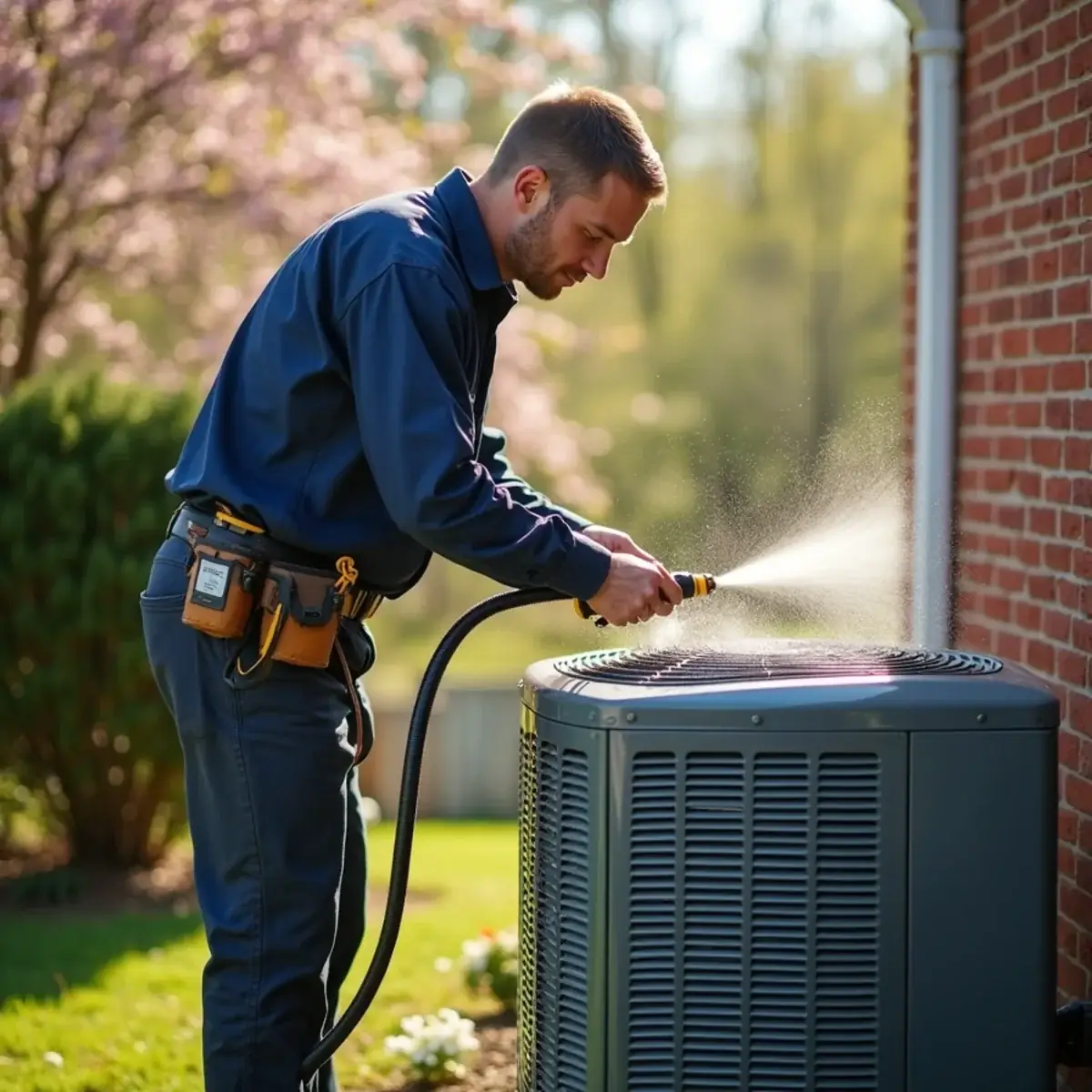
A light layer of frost on a heat pump in winter is normal. The unit runs a defrost cycle every so often, and you may see steam rising from it. That's fine.
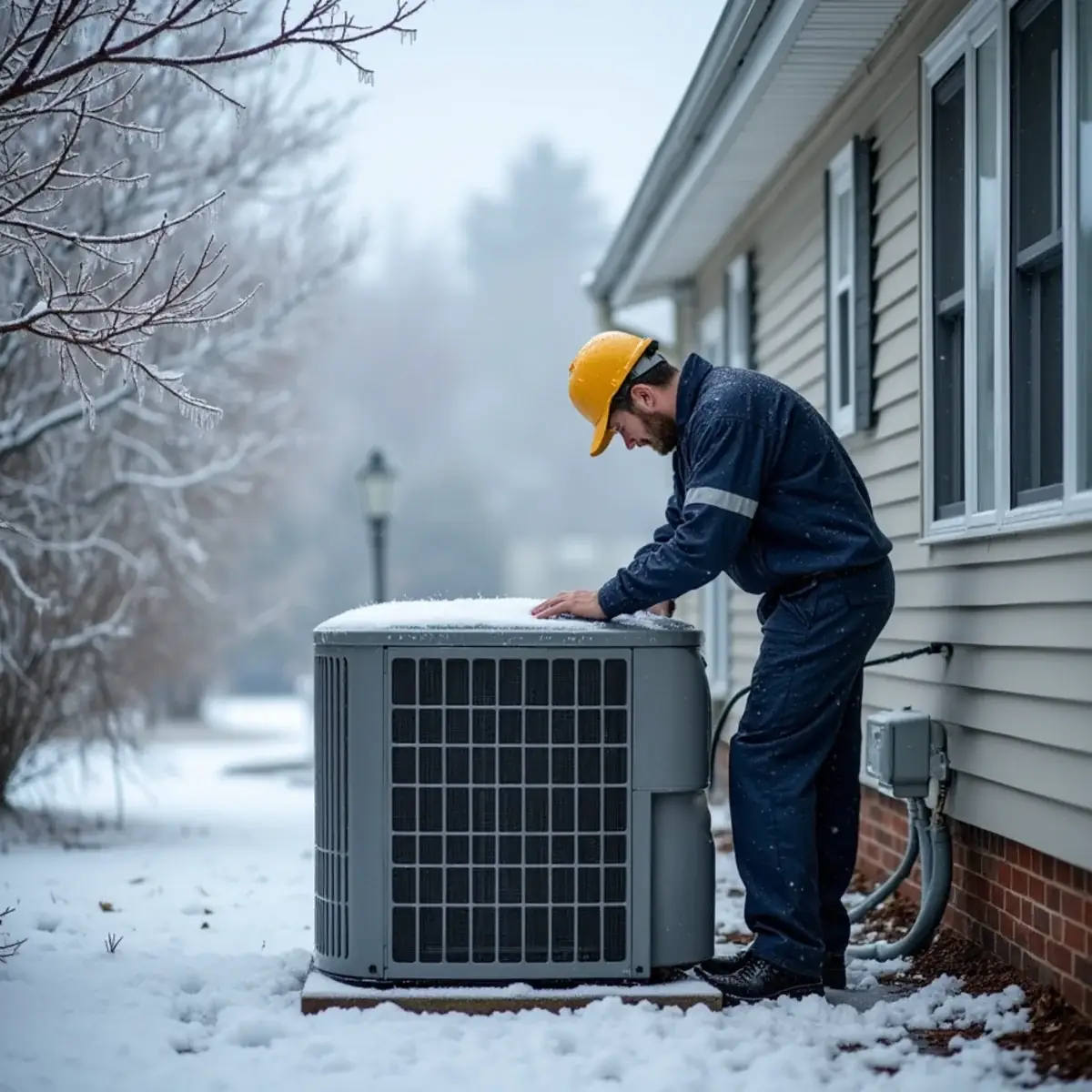
A solid shell of ice from freezing rain is different. The outdoor fan can't move air through the coil, and the fan blade can hit the ice and break.
- Set the thermostat to Emergency Heat (sometimes labeled EM Heat or Aux). This shuts off the outdoor unit and runs the backup electric heat strips or furnace.
- Do not chip, pry, or hammer the ice. The coil fins and refrigerant tubing are thin and easy to puncture.
- Don't pour boiling water on the unit. It can refreeze into a thicker layer and shock cold components.
- Check that gutters above the unit aren't dumping water directly onto it. Note it for later if they are.
- Once temperatures rise and the ice melts, switch back to normal Heat. If the outdoor unit won't restart or makes grinding noises, call us.
Emergency heat costs more to run than normal heat pump operation, so treat it as a short-term fix, not a winter setting.
Step 4: When the Power Comes Back On
Power often flickers on and off several times before it's restored for good. Those surges are hard on compressors and control boards.
- Turn the thermostat to Off until power has been stable for 15 to 30 minutes.
- Check the breakers for the air handler, furnace, and outdoor unit.
- Turn the system back to Heat and listen. You should hear the blower start and, on a furnace, see the ignition sequence begin within a few minutes.
- If a furnace tries to light several times and shuts down, it may be in a safety lockout. Leave it off and call for service rather than repeatedly cycling power.
Step 5: Keep the House and Pipes Warm Meanwhile
- Pick one interior room, close its doors, and gather the family there with blankets and layers.
- Hang blankets over drafty doorways and close curtains at night.
- Let faucets on exterior walls drip slowly and open sink cabinet doors so warmer air reaches the pipes.
- Keep the fridge and freezer closed as much as possible.
- Check on elderly neighbors. Older adults lose body heat faster and may not notice it happening.
Getting Help After the Storm
Right after an ice storm, every HVAC company in the region gets busy. We handle same-day service on most calls, and we'll tell you honestly when we can be there. Homeowners across Alamance County, including out in Mebane, where newer heat pump subdivisions sit alongside older farmhouses, can reach us the same way.
When you call, let us know whether the power is on, what type of system you have, and whether you saw ice, heard unusual noises, or noticed a burning smell when power returned.
Ice storms and home heating: what's true and what isn't
Myth: Emergency Heat is a stronger setting for the coldest nights.
Fact: Emergency Heat isn't extra power. It shuts off the outdoor heat pump and runs only the backup strips or furnace, which normally assist automatically whenever the heat pump needs help. With a working outdoor unit, the system already blends both sources as needed. Choosing Emergency Heat by habit simply throws away the heat pump's efficiency and runs up the power bill.
Myth: Heat pumps stop making heat once it drops below freezing.
Fact: A heat pump keeps pulling heat from outdoor air well below 32 degrees. Its output does fall as temperatures drop, which is why auxiliary strips help out on the coldest mornings. A properly sized Piedmont system handles most winter nights with little strip use. If yours can't hold temperature in the 30s, suspect low charge, a defrost fault or failed strips.
Myth: Carbon monoxide alarms only matter in homes with gas appliances.
Fact: During a storm, all-electric houses face CO risks too. A portable generator running in an attached garage, a car warming up with the garage door closed, or a kerosene heater brought indoors can fill a house with carbon monoxide. Every home needs working alarms near sleeping areas, and battery backup is what keeps them working during an outage.
Myth: If the heat pump restarts after the ice melts, nothing was damaged.
Fact: A restart only proves the compressor and controls survived. Ice can nick fan blades, which then wobble and wear out the motor bearings over the following weeks. Ice sliding off the roof edge can flatten coil fins or kink a refrigerant line. Listen for new vibration or scraping, look over the cabinet, and have it checked before the damage strands you again in February.
Ice-storm heating problems across Alamance County and Mebane
Freezing rain doesn't hit every house the same way. Across Alamance County's mill villages, brick ranches and rural roads, the way a home was built decides what fails first.
- Mill-village houses on piers in Haw River, Glen Raven and Saxapahaw lose heat quickly through open crawlspaces, and water lines under the floor sit close to foundation vents. Close the vents before the storm arrives.
- Rural homes toward Snow Camp often heat with propane. A burner that sat idle since spring collects dust and spider webs, so the first hard freeze is when it refuses to light.
- Older heat pumps with burned-out auxiliary strips can't carry a house once nights drop into the 20s, which ice storms reliably bring.
Mebane is roughly 15 to 20 minutes east on I-40/85. In the newer subdivisions off Mebane Oaks Road, heat pumps with attic air handlers are the norm, so an outage means waiting for power and then checking the outdoor unit for ice. Near Clay Street, older homes run gas furnaces that need electricity for the inducer and igniter like any other. After the storm, heating repair for Mebane homes usually turns out to be a surge-damaged board or a furnace sitting in lockout.
From the field: what we see after Piedmont ice storms
Most heat pumps in Alamance County were sized for our mild winters, and so were their backup heat strips. On Emergency Heat alone, a house with small strips may hold 60 degrees but not 70 when it's in the teens outside. That's normal, not a failure. Closing off unused rooms and keeping doors shut helps the strips keep up.
When power comes back to a whole neighborhood at once, every heat pump and every set of strips tries to start together. We'd rather you bring the thermostat up a few degrees at a time than jump from 52 to 72. It's easier on the equipment and on the line coming back from the utility.
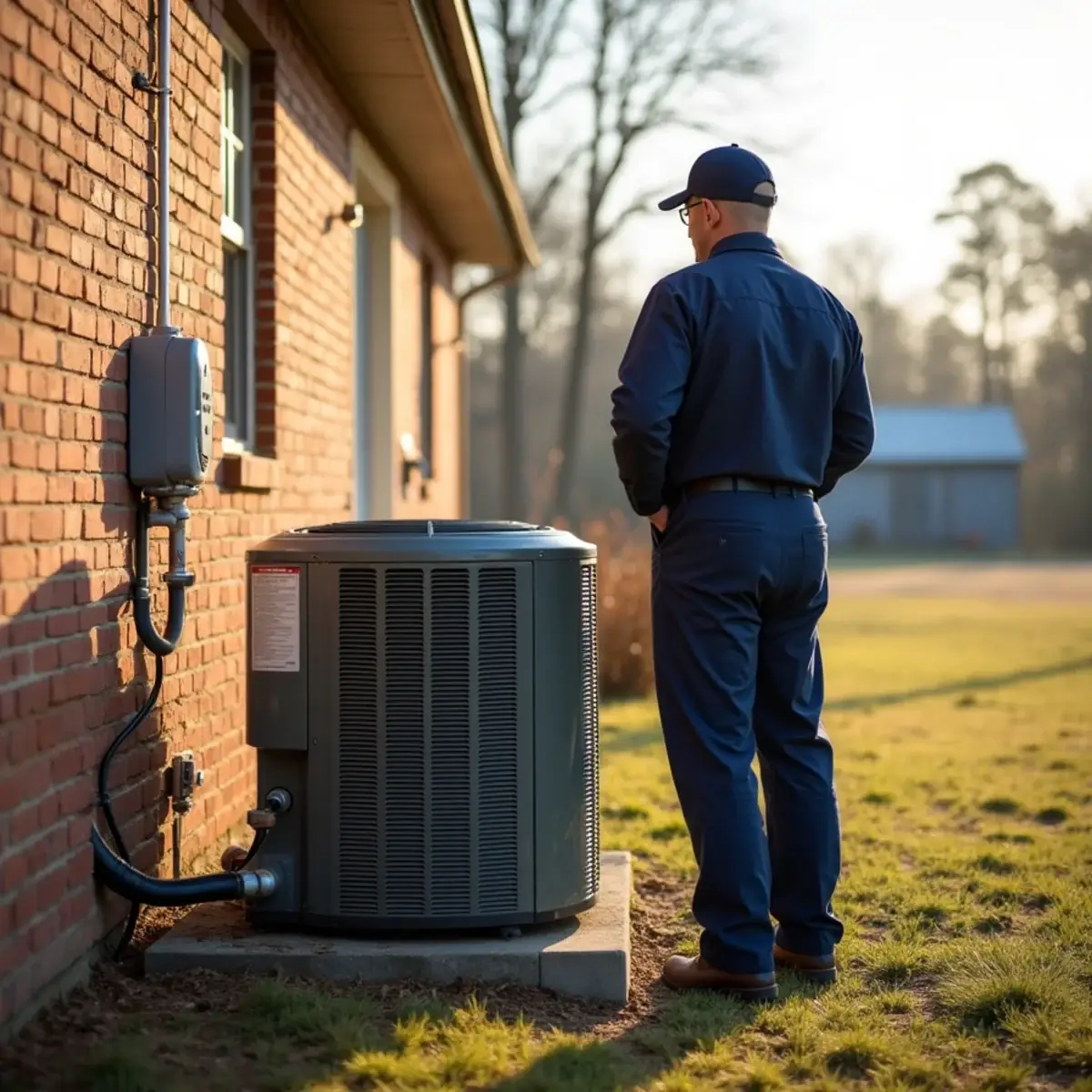
- Gutters and roof drip: a stream of water landing on the outdoor unit refreezes into a solid block. A simple diverter or gutter repair above the unit prevents a lot of these calls.
- Pad height: a unit sitting low in a wet spot can freeze into its own meltwater. Raising it on a proper stand lets defrost water drain away.
- Generators: a portable generator usually can't run a heat pump, but a gas furnace's blower and controls draw much less. Connecting one safely takes a transfer switch or inlet installed by a licensed electrician, never a cord plugged into a dryer outlet.
If your heat pump ran on backup heat all storm and the bill spiked, have the defrost controls checked with heat pump service before next winter. A failed defrost sensor looks exactly like an ice storm problem.
Bring the Heat Back Safely
Most ice-storm heating problems resolve once the power is stable and the ice melts. When they don't, it's usually a surge-damaged part, a heat pump fan damaged by ice, or a furnace that locked itself out. If your system isn't coming back on its own, book no-heat repair with Littlejohn HVAC and we'll diagnose it and give you written options before any work. We also handle heat pump service and defrost problems and gas furnace repair year-round.
Frequently asked questions
Should I use emergency heat during an ice storm?
Only if the outdoor heat pump unit is iced over or not working. Emergency heat bypasses the outdoor unit and uses backup heat, which keeps the house warm but costs more to run. Switch back to regular Heat once the ice has melted and the outdoor unit is clear.
Can I use a space heater when the heat goes out?
An electric space heater is fine if you have power and follow the directions: plug it directly into the wall, keep it three feet from anything that can burn, and never leave it running while you sleep. Never use fuel-burning heaters that aren't rated for indoor use.
My power is back but the furnace still won't turn on. What now?
Check the breaker and the furnace service switch, which often looks like a light switch near the unit. Wait a few minutes after resetting. If it still won't run or it tries to ignite and shuts off, a surge may have damaged the control board or the furnace is in lockout. That needs a technician.
Local service for this topic

Written by Littlejohn HVAC Solutions, LLC. Owner Jesse Littlejohn is a licensed HVAC professional serving Burlington and Alamance County. About us