Short answer: When your AC stops working in a Burlington heat wave, confirm the thermostat is on Cool, reset a tripped breaker once, replace a clogged filter, and look for water in the drain pan or ice on the lines. If cooling doesn't return, shut the system off, move vulnerable family somewhere cool, and call for same-day repair.
Most AC failures in Burlington don't happen on a mild May morning. They happen on the third straight day of mid-90s heat, when the system has been running nonstop and the humidity makes the house feel even worse than the thermometer says. That's when a weak capacitor finally gives out or a drain line that's been slowly clogging all summer trips the float switch.
The good news: a fair number of no-cooling calls turn out to be something simple. The bad news: some of the things people try in a panic make the problem worse or put them in danger. Here's how we'd walk a neighbor through it over the phone.
First, Make Sure Everyone in the House Is Safe
Before you touch the thermostat, think about who's in the house. Infants, older adults, anyone with heart or lung problems, and anyone on medications that affect sweating are at higher risk when indoor temperatures climb. A house with no cooling can get dangerously hot by mid-afternoon, especially upstairs.
Know the warning signs of heat exhaustion: heavy sweating, cool and clammy skin, dizziness, headache, nausea, muscle cramps, and unusual tiredness. Move that person somewhere cooler, loosen clothing, and give sips of water. Signs of heat stroke are more serious: a very high body temperature, hot red skin that may be dry or damp, confusion, a fast strong pulse, or passing out. Heat stroke is a medical emergency. Call 911.
Safe Checks You Can Do in Five Minutes
These checks don't require tools, don't involve opening any panels, and can save you a service call if the fix is simple.
- Thermostat: Confirm it's set to Cool, the fan is on Auto, and the set point is at least a few degrees below room temperature. If the screen is blank, replace the batteries.
- Breakers: Look at your main electrical panel for a tripped breaker labeled AC, condenser, air handler, or furnace. You can reset a tripped breaker once. If it trips again, stop and call us, because something is drawing too much current.
- Outdoor disconnect: Make sure the pull-out or switch in the box on the wall next to the outdoor unit is fully seated or turned on. Don't open it up beyond that.
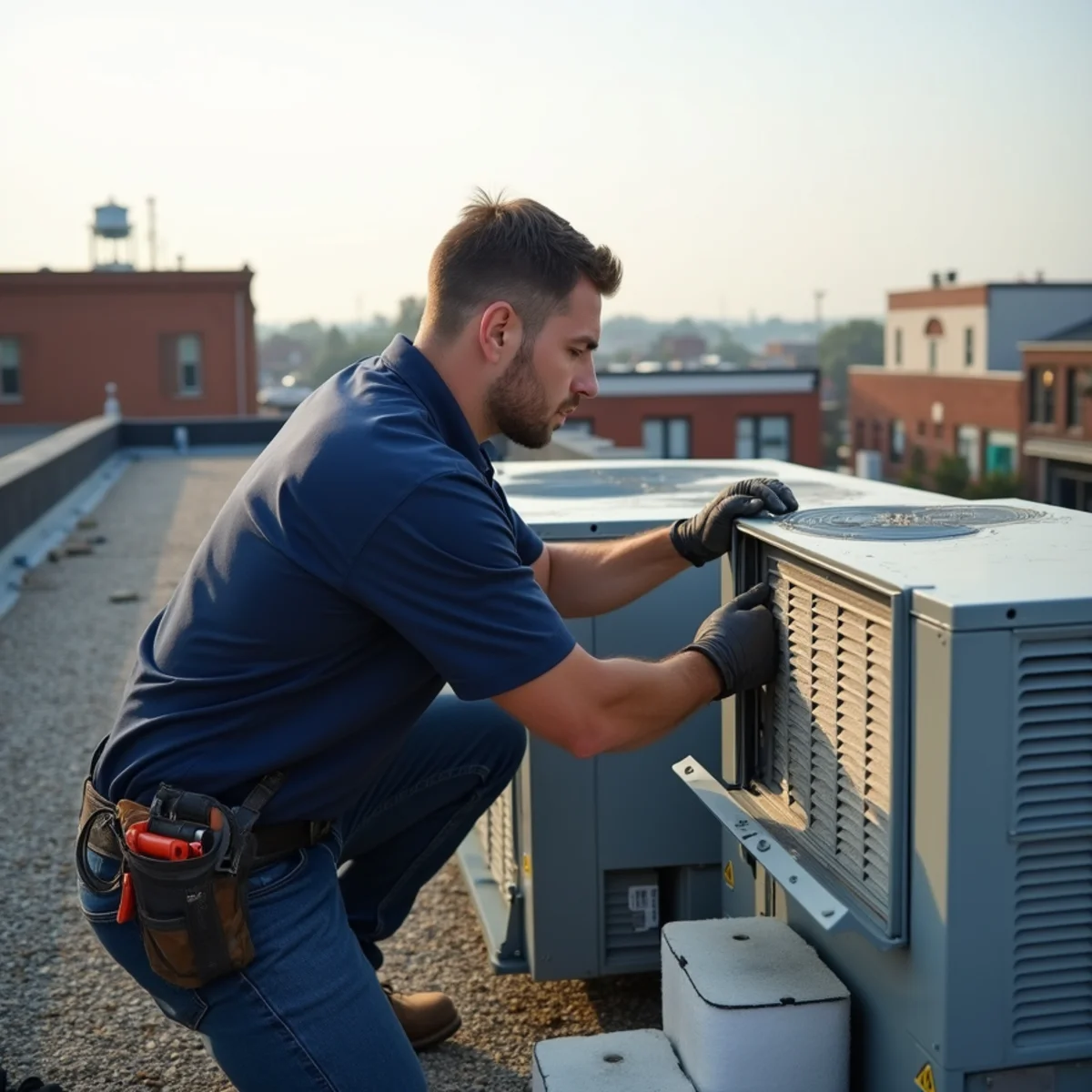
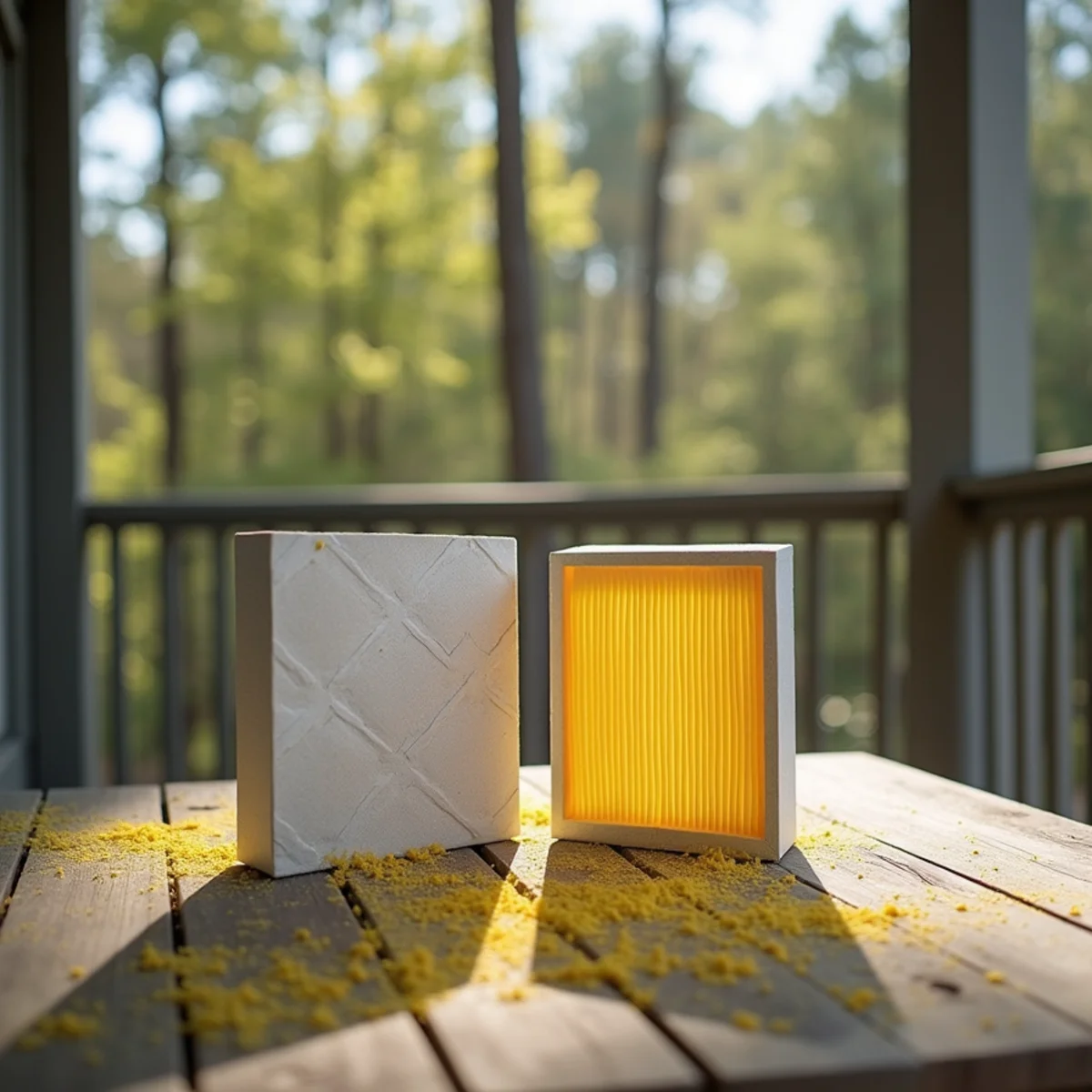
- Air filter: A filter packed with dust and pollen can choke airflow badly enough that the indoor coil freezes. If it's gray and matted, swap it.
- Drain line and float switch: Many systems have a safety switch that shuts off cooling when the condensate pan fills with water. If you see standing water in the pan or around the indoor unit, that's likely why the system shut down.
If the Indoor Coil or Copper Line Is Iced Over
Ice on the big copper line at the outdoor unit or frost on the indoor coil means the system needs to thaw before it will cool again. Set the thermostat to Off and the fan to On for a few hours. Don't chip at the ice. A frozen coil points to low airflow or a refrigerant problem, and it will come right back if the cause isn't found.
What to Leave Alone
In a heat wave it's tempting to start pulling covers off equipment. Please don't. The outdoor unit holds a capacitor that can deliver a serious shock even with the power off, and refrigerant work legally requires EPA Section 608 certification for good reason.
- Don't open the outdoor unit's electrical panel or poke at the contactor with a stick or screwdriver.
- Don't add refrigerant from a store-bought can. Those products can contaminate the system and mask a leak.
- Don't keep resetting a breaker that keeps tripping.
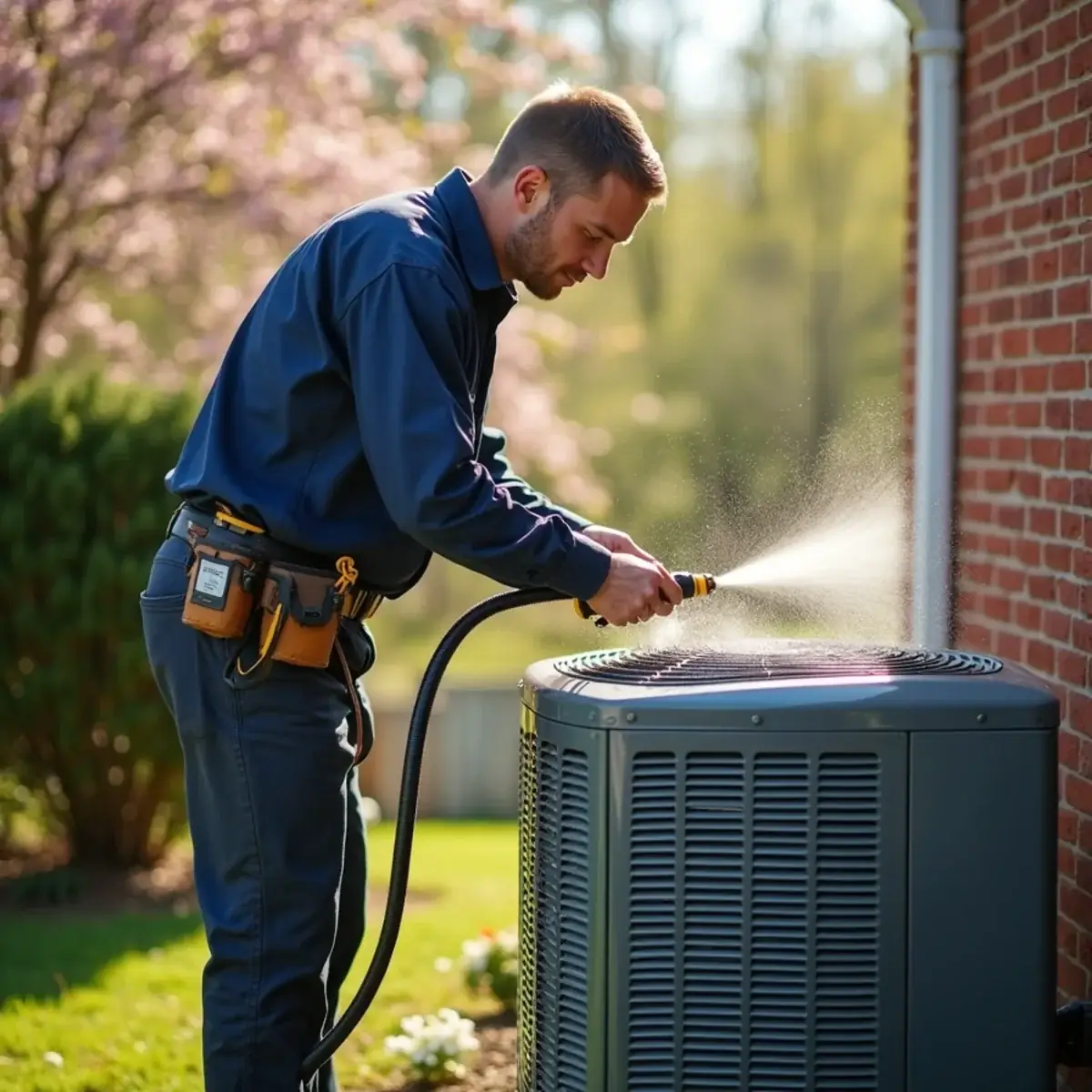
- Don't hose down the inside of the unit or spray water into the electrical compartment.
- If you smell burning, see smoke, or hear buzzing or arcing, shut the system off at the thermostat and the breaker and keep people away from the equipment.
Common Reasons an AC Quits in the Heat
Long, hot run times expose weak parts. These are the problems we find most often on summer calls across Burlington, Graham, and Elon, along with what you might notice.
| What you notice | Likely cause | Who handles it |
|---|---|---|
| Indoor fan runs, outdoor unit is silent | Failed capacitor, contactor, or tripped breaker | Technician |
| Outdoor unit hums but the fan doesn't spin | Bad capacitor or seized fan motor | Technician |
| System shut off, water in the pan | Clogged condensate drain tripped the float switch | Technician (you can report it) |
| Air is cool but weak, ice on lines | Dirty filter, dirty coil, or low refrigerant | Filter: you. Coil/refrigerant: technician |
| Thermostat screen is blank | Dead batteries, blown low-voltage fuse | Batteries: you. Fuse: technician |
A dead capacitor is one of the most common summer failures and usually a quick repair. It's also why a second opinion can be worth it. Plenty of homeowners get told they need a new system when the real problem is a part that costs far less than a replacement.
Keeping the House Cooler While You Wait
- Close blinds and curtains on the south and west sides of the house.
- Move everyone to the lowest floor. Upstairs bedrooms heat up fastest.
- Skip the oven, dryer, and dishwasher's heated dry cycle until the evening.
- Drink water steadily, even before you feel thirsty. Go easy on alcohol and caffeine.
- Check on elderly neighbors and family, especially anyone who lives alone.
What to Tell Us When You Call
A few details help Jesse show up with the right parts. Tell us whether the indoor fan is running, whether the outdoor unit is running, humming, or silent, whether you see water or ice, and the approximate age of the system. A quick photo of the outdoor unit's data plate and the thermostat screen helps too.
We offer same-day service on most calls, and we call ahead when we're on the way. If you're in Graham, where older homes often have undersized ductwork, or out toward Elon and the neighborhoods around campus, we cover you just as quickly as we do in Burlington proper.
Heat-wave AC failures: myths vs. facts
Myth: If the outdoor fan is spinning, the air conditioner must be working.
Fact: The condenser fan and the compressor are separate motors. The fan can keep turning while the compressor sits off on its thermal overload or won't start because of a weak capacitor. A quick check: the larger insulated copper line at the outdoor unit should feel cold and sweaty within a few minutes of cooling starting. Warm or dry means the compressor isn't doing its job.
Myth: An AC that can't keep up in a heat wave is too small for the house.
Fact: Residential systems in the Piedmont are sized for typical summer design temperatures, not the rare record afternoon. On the hottest days a correctly sized unit is expected to run almost nonstop and drift a few degrees above setpoint. That's by design. A system that stops cooling entirely has a failed part, and upsizing to chase record days leaves the house clammy the rest of summer.
Myth: Spraying the outdoor unit with a hose will get it running again.
Fact: Water on the coil won't restart a condenser stopped by a dead capacitor, a burned contactor or a tripped overload. A gentle rinse with the power off does help a coil caked with pollen and clippings, but that's maintenance, not an emergency fix. Aiming a hose into the electrical compartment of a unit that's still energized is a real shock hazard.
Myth: A system only a few years old won't break down in the heat.
Fact: Newer systems fail in heat waves too, just for different reasons. Algae clogs condensate lines and trips float switches, ants pack into contactors, and a wire connection loosened during installation finally burns through under peak load. Age lowers the odds of a capacitor or compressor problem, but a two-year-old unit still deserves the same safe checks and a prompt call.
What a heat-wave breakdown looks like in Graham and Elon
Both towns sit about 10 minutes from our Burlington base, so a no-cooling call placed in the morning usually gets a visit that afternoon. The failures we find, though, depend a lot on the street.
In Graham's older neighborhoods around Court Square, early-1900s houses hide their ductwork in crawlspaces sometimes only 18 inches deep. When a heat wave arrives, crushed flex and undersized returns choke airflow until the indoor coil ices over, and the complaint sounds like a dead AC even though the condenser is fine. Out in Graham's brick ranches, it's more often an outdoor unit humming without starting, the classic worn capacitor.
Elon's pattern follows the university calendar. Rental houses near campus fill back up in August, right when the heat peaks, and a system that coasted all summer suddenly carries a full house with the thermostat pinned low. What to check first in an Elon rental that stops cooling:
- The filter, which tenants often haven't touched since spring
- Furniture pushed flat against the return grille
- The condensate float switch, since late-summer algae clogs drain lines in busy houses
From the field: why systems quit on day three of a heat wave
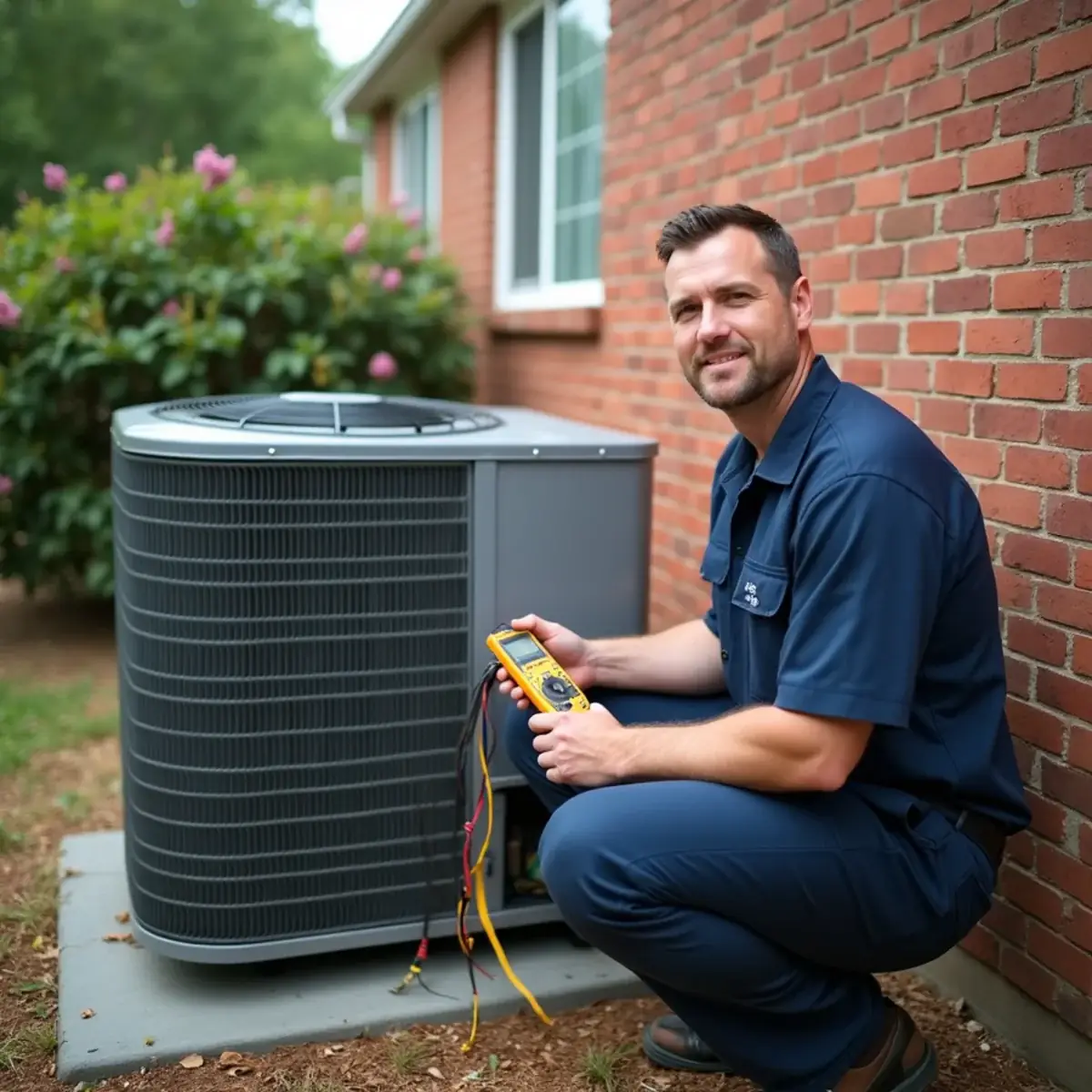
Heat-wave failures are rarely random. A run capacitor loses capacity slowly over years, and a part testing a little under its rating will start a compressor fine on an 80-degree May afternoon. At 97 degrees, with the outdoor coil fighting high head pressure and the compressor pulling more amps, that same weak capacitor finally can't do its job. That's why Jesse carries the common sizes on the truck and tests them against the rating on the label, not by eye.
The second pattern is a dirty outdoor coil. Pollen, dryer lint and grass clippings packed into the fins make the condenser run hotter, which raises pressures and amp draw on every part in the box. A coil that looks "a little dusty" can be the difference between keeping up and tripping on overload by 4 p.m.
One thing not to do while you wait
Don't drop the thermostat to 65 to "catch up." A properly sized system in Piedmont heat can only pull the house down slowly on the hottest afternoons, and a lower set point just keeps a struggling unit running longer. Pick a steady setting in the upper 70s and let it work.
Get Cool Air Back Today
A heat-wave breakdown feels like a crisis, but most of the time it's one failed part, not a failed system. Do the safe checks, keep your family out of the heat, and leave the electrical and refrigerant work to a licensed tech. If your system has quit and you need it running today, schedule emergency AC repair in Burlington and we'll give you a written option before any work starts. Once you're cooling again, ask about routine AC repair diagnostics or a spring maintenance visit so the next heat wave doesn't catch you off guard.
Frequently asked questions
How long can a house go without AC in a North Carolina heat wave?
It depends on the house and the people in it. A well-shaded brick ranch may stay tolerable for part of a day, while a second floor can become dangerous within hours. If anyone in the home is elderly, very young, or has health conditions, don't wait it out. Move them somewhere cool and call for service.
Is it safe to reset my AC breaker?
Resetting a tripped breaker once is fine. If it trips again right away or after a few minutes, leave it off. Repeated tripping usually means a shorted motor, failing compressor, or wiring problem, and forcing the system to run can cause more damage or a fire risk.
Why is my AC running but the house won't get below 80 degrees?
On the hottest afternoons a properly sized system may run constantly and still lag a few degrees. But if it can't catch up overnight, look for a dirty filter, a dirty outdoor coil, low refrigerant, or leaky ductwork. A technician can measure temperatures and pressures to pin down which one it is.
Local service for this topic

Written by Littlejohn HVAC Solutions, LLC. Owner Jesse Littlejohn is a licensed HVAC professional serving Burlington and Alamance County. About us